
 €
€ Hiking
  Camping
  Trail
Trail  Running
  Mountaineering
  Climbing
  Mountain biking
  Road biking
  Survival
  Canyoning
  Alpine Skiing
  Ski touring
  Snow activities
  Snowboarding
  Cross-country skiing
  Lifestyle



avalanche airbag comparison: expert guide AlpinStore
Do you want a clear, pragmatic, and tested avalanche airbag comparison by practitioners? We explain the differences, when to prioritize volume, when to focus on weight, and how to integrate an airbag pack into your safety protocol. AlpinStore is a team of seasoned athletes: we speak the truth, without bullshit, like friends in a climbing party.
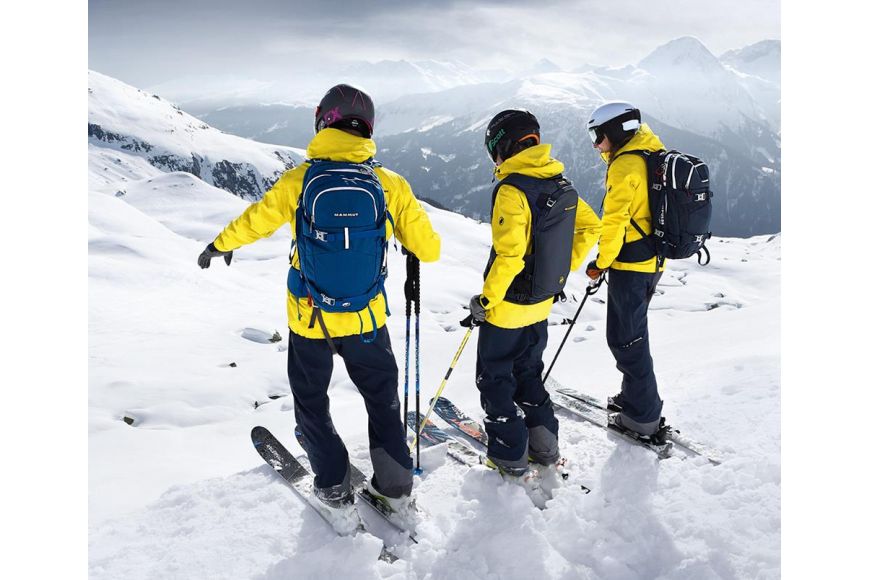
Airbags are a major complement to the triptych shovel-probe-AVD. They do not replace terrain reading or good decision-making, but they significantly increase your chances of staying on the surface in case of burial. In this comparison, we review the technologies (battery, cartridge, mechanical system), useful volumes, inflation times, and usage tips for committed hiking, raids, and professional work in the mountains.
We present here representative bags and systems available at AlpinStore: Mammut, Arva, Pieps, ABS, Millet, Black Diamond, and Ortovox. These brands cover solutions with cartridge deployment, battery, or proprietary systems, with different design logics depending on use: ultra-light for ski touring, large volume for raids, re-deployable systems for professionals.
If you are also looking to complete your equipment, consider complete packs: we regularly offer a ski touring offer with bindings and skins that makes it easier to start your season. And for tight budgets, our selection also includes affordable ski touring gear and suitable skis, as safety and accessibility must go hand in hand.
Here are some quick criteria for choosing your airbag pack: useful volume for carrying overnight gear and rescue, number and position of airbags, inflation system (speed and air flow), ease of re-deployment in the field, total weight, and compatibility with your attachment system. Don't forget maintenance: charged battery, checked cartridge, and activation handle in perfect condition.
We know that buying an airbag often fits into a larger set: clothing, protections, and tools. Also check out ski touring clothing adapted to movement and breathing during ascents, and remember to integrate your usual ski touring gear into your volume choice.
Do you want to quickly compare models? Here is a summary table with the main technical characteristics: volume, number of airbags, weight, and inflation capacity. This table includes data observed in the field and in tests by our team.
| product name | volume (l) | number of airbags | weight (kg) | inflation |
| pro airbag protection pack 3.0 mammut 35 l | 35 l | 1 | 1.2 kg | 150 liters in 3 seconds |
| air bag reactor 40 l arva | 40 l | 1 | 2.15 kg | 150 liters |
| airbag backpack pieps jetforce tour rider 34 | 24 l | 1 | 3.5 kg | 200 liters in 3 seconds (jetforce) |
| airbag pack abs powder base unit | 26 l | 2 | 1.9 kg | 170 liters in 3 seconds |
| airbag pack millet neo 20 ars | 20 l | 1 | 2.1 kg | 150 liters in 3 seconds |
| airbag backpack black diamond saga 40 | 40 l | 1 | 3.5 kg | 200 liters in 4 seconds (jetforce) |
| airbag pack ascent 30 avabag ortovox | 30 l | 1 | 1.86 kg | 160 liters |
How to read this table? If you mainly do light ski touring, aim for volumes between 20 and 35 l and a contained weight: the millet neo 20 ars or the mammut 35 l are designed for those who want touring and performance. For raids with bivouac or professionals, prioritize the 40 l from Arva or Black Diamond.
For practitioners looking for purchasing opportunities, we also regularly list ski touring bags on sale and packs that combine gear and advice. If your budget is tight, check promotions on affordable ski touring skis and watch for packaged offers that include essentials.
Which system to choose?
- rechargeable battery: practical for multiple deployments and training, useful for professionals and guides;
- mechanical cartridge: simple, lightweight, and reliable, an excellent option for excursions where weight matters.
Beyond the technical choice, training remains essential: practice DVA searches, dig in pairs, master snowpack reading. And don't forget the complete avalanche safety equipment: shovel, probe, and AVD must be tested and known before each outing.
Finally, some field advice: check the compatibility of the pack with your ski holder or attachment system, practice voluntary triggering in a secured area, keep the activation handle within reach, and consider system redundancy (charged battery or spare cartridge if possible). We also recommend evaluating your pack in real conditions: carrying, transitions skin/descent, and walking comfort.
If you want us to help you choose based on your program, contact the AlpinStore team: we guide you according to your size, habits, and type of outings. Our testers use this equipment in mountaineering, freeride, raids, and professional missions; their feedback informs this comparison to give you a realistic field perspective.
In conclusion, a well-chosen and properly used airbag increases your chances in case of avalanche. Combine it with terrain reading, mental preparation, and appropriate gear to limit risks and enjoy the mountains safely.
If you want to complete your equipment, also check our dedicated selection and maintenance advice to extend the life of your airbag pack.
Have a good outing, stay safe, and take care of the mountains.

Leave a Reply
All fields are required