
 €
€ Hiking
  Camping
  Trail
Trail  Running
  Mountaineering
  Climbing
  Mountain biking
  Road biking
  Survival
  Canyoning
  Alpine Skiing
  Ski touring
  Snow activities
  Snowboarding
  Cross-country skiing
  Lifestyle



Avalanche airbag comparison 2018 - 2019
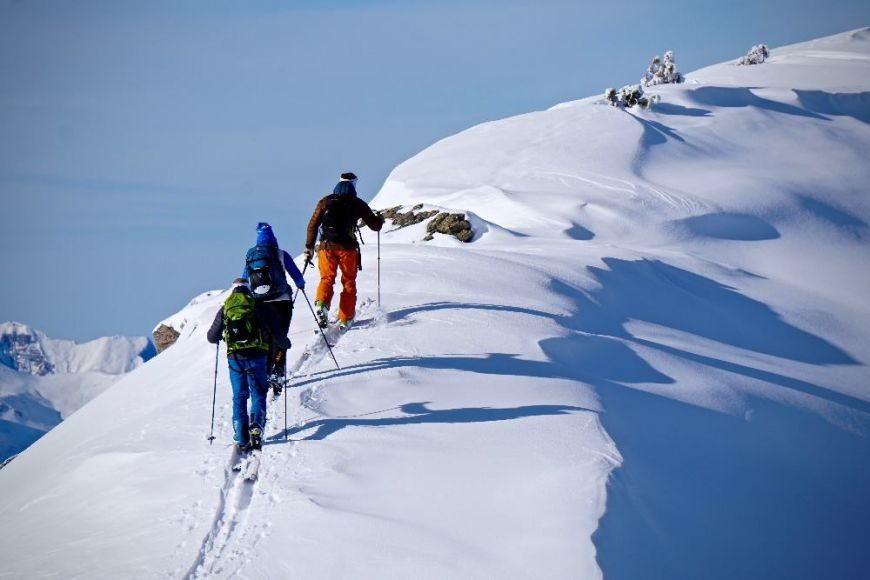
AlpinStore offers you a passionate and technical comparison of the airbags available during the 2018-2019 period. We explain the differences, provide clear benchmarks to choose your airbag pack based on your practice: committed freeride, ski touring, or long ski touring outings. We are a team of field users: tests, feedback, and raw truth. We speak to you without bullshit, like friends in a climbing team.
Why an airbag? Simple: to increase your chances of staying on the surface in case of an avalanche. But not all technologies are equal: mechanical system vs electronic system, weight, volume, number of possible deployments, inflation time and volume. This avalanche airbag comparison 2019 guides you to weigh these criteria and choose the most suitable solution for your actual use.
Before diving into the details of the models, a quick reminder: an airbag is a compromise between safety and ergonomics. You want a pack that allows you to carry your gear when you go on a long excursion, without turning the ascent into dead weight. And for freeride, you want compactness and responsiveness. For tours, you will prioritize volume and carrying comfort.
If you go light and minimalist, you know the pleasure of naked ski touring: compact pack, reduced weight, freedom of movement. But even with little gear, the airbag can make a difference. Conversely, those who want to load for several days should look at models 30 L and above, designed for intensive carrying.
| Product | Volume | Weight | Inflation | Recommended use |
| Backcountry Patrol 30 SCOTT airbag pack / ALPRIDE E1 | 30 L | 2.67 kg | supercapacitor, rapid deployment | freerando / committed outings |
| Reactor 18 L ARVA airbag | 18 L | 2 kg | light and compact | freeride, short session |
| Light Safe 20 FERRINO airbag pack | 20 L | 1.95 kg (pack + system) | ALPRIDE 2.0, ultra light | light all mountain |
| Ultralight 25 ARVA airbag | 25 L | 1.72 kg | optimized weight / volume | long touring or freerando |
| Pro Protection Airbag 3.0 MAMMUT | 35 L | 1.2 kg (system) | 150 L in 3 s | raid, heavy load |
| Reactor 40 L ARVA airbag | 40 L | 2.15 kg | large volume, lightness | long missions, expeditions |
| Pieps Jetforce Tour Rider backpack | 24 L | 3.5 kg | Jetforce: battery, recompression | multiple use, recompressible |
| Black Diamond Saga 40 backpack | 40 L | 3.5 kg | Jetforce, large volume | ski patrollers, professionals, raids |
| Ascent 30 AVABAG ORTOVOX airbag | 30 L | 1.86 kg | 160 L | long ski tours |
What to remember from this table? First, the weight ranges: recent electronic systems have reduced weight while increasing reliability. The 18-25 L packs are perfect for freeride and day trips. The 30-40 L packs target raids and professionals. Inflation varies: 150-200 liters; the faster the volume and time, the better the probability of staying on the surface.
Now, some concrete tips for choosing: evaluate your program, your volume needs, your technical level, and your weight acceptance. If you also want to buy ski touring shoes, make sure the pack does not hinder putting on ski touring boots. If you store ski touring gear (ice axe, crampons), check the external attachments and the pack's capacity.
- Prioritize safety: the best airbag is the one you will wear every day.
- Test the carrying: comfort in ascent and access to your gear.
- Consider maintenance: battery, recharge, rearming.
We also advise you, if you want to buy ski touring equipment, to think globally: a good airbag pack does not replace learning avalanche safety. Learn to read the terrain, make calibrated routes, and practice DVA workshops with your group.
For individual equipment, don't forget to choose your ski touring goggles: good ventilation, UV protection, and compatibility with the helmet are essential. The outfit also matters: a technical outfit for ski touring that is breathable and windproof keeps you effective during long efforts.
Our customers often ask us: which model for mixed use? We respond: a 25-30 L with a light system is an excellent compromise. The 40 L models remain recommended for missions where you need to carry a lot of gear or for guides and patrollers.
Finally, safety cannot be bought just with a pack: if you want to buy avalanche safety, think of a complete pack: DVA, shovel, probe, airbag, and training. These elements together multiply your chances in case of an accident and should be chosen and tested together.
Conclusion: the avalanche airbag comparison 2019 highlights clear technical progress. Modern packs offer better weight/volume ratios, recompressible systems or multiple deployment, and ergonomics adapted to each practice. At AlpinStore, we help you choose: we test, compare, and explain without beating around the bush.
Want advice? Come talk to us about your program: we will recommend the suitable model and offer complementary gear. We are passionate, we love the outdoors, we protect the outdoors: technical, pragmatic, and responsible solutions.
- Need help choosing? Contact our team of expert testers.
- Take an avalanche training: it's the best investment for your outings.
Stay fearless, stay cautious, and choose the airbag that truly matches your adventure.

Leave a Reply
All fields are required