
 €
€Sign in
Contact
 Hiking
  Camping
  Trail
Trail  Running
  Mountaineering
  Climbing
  Mountain biking
  Road biking
  Survival
  Canyoning
  Alpine Skiing
  Ski touring
  Snow activities
  Snowboarding
  Cross-country skiing
  Lifestyle





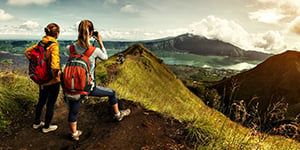
Hiking compass
Hiking Compass: Practical Guide
The compass is a simple and reliable tool. It helps to navigate when the trail disappears or when the GPS weakens. This guide explains how it works, the types available, how to choose it, and how to use it with a map.
How It Works and Basic Principles
The compass relies on a magnetic needle that aligns with the Earth's magnetic field. Understanding three concepts is enough to get started: magnetic north, true north, and declination (the difference between the two). Learn to read the needle, set a bearing (azimuth), and compensate for local declination.
Types of Compasses
- Baseplate compass: ideal for hiking. It has a ruler for the map and a rotating bezel.
- Sighting compass: useful for aiming at distant points with precision.
- Wrist compass: convenient for quick access, less precise for map reading.
- Lensatic compass: robust, often used in tactical situations.
- Electronic compass: advanced functions but dependent on batteries.
Criteria for Choosing a Hiking Compass
- Readability of the bezel and clear graduations.
- Presence of map scales on the baseplate.
- Adjustment of declination for your region.
- Damped mechanism (liquid) for a stable needle.
- Durability and ease of use with gloves.
- Weight: important if you are assembling a complete hiking kit.
Other Equipment to Consider
In addition to the compass, bring a paper map, a notebook, and appropriate protections. To reduce accessory costs, consider affordable sunglasses to protect your eyes without weighing down your pack. For progress on varied terrain, knowing how to choose your trekking poles can also make a difference. If you are looking for specific brands for poles, Leki hiking poles are often mentioned for their quality.
Techniques for Using a Compass in the Wild
Here are the essential steps:
- Orient the map: lay the map flat and align the north of the map with the magnetic north indicated by the compass (adjust declination if necessary).
- Take a bearing: point the compass towards your target, turn the bezel until the needle aligns with the north mark, read the azimuth.
- Follow a bearing: use landmarks in the landscape (trees, rocks) to maintain direction rather than constantly looking at the compass.
- Backbearing: to check your position or return to the starting point.
- Triangulation: take bearings on two or three visible points and plot them on the map to determine your position.
How to Use a Compass with a Map
- Lay the map flat.
- Connect your position and destination with a straight line.
- Place the baseplate of the compass along this line.
- Turn the bezel until the north graduations align with the north of the map.
- Read the azimuth and correct for local declination to get the bearing to follow on the ground.
Selection and Practical Tips
To choose, test the grip. A useful compass for hiking should be easy to read and use in the rain. Check a Sol outdoor selection if you want recommendations grouped by use (hiking, mountaineering, navigation).
FAQ
How to use a compass while hiking?
Orient the map, take a bearing towards the target point, follow visual landmarks, and correct declination if necessary.
What are the different types of compasses?
The most common for hiking are the baseplate compass and the sighting compass. There are also wrist, lensatic, and electronic models.
Which compass is best suited to my needs?
For hiking, a baseplate compass with a rotating bezel and map scales is sufficient in most cases. Choose durability and readability over extreme compactness.
How to use a compass with a map?
Place the baseplate on the line between your point and the destination, turn the bezel to align north, then read the azimuth and compensate for declination.
Practice on easy routes before venturing into isolated terrain. The compass remains a reliable, simple tool that does not require batteries. Happy hiking and good navigation!
