
 €
€Sign in
Contact
 Hiking
  Camping
  Trail
Trail  Running
  Mountaineering
  Climbing
  Mountain biking
  Road biking
  Survival
  Canyoning
  Alpine Skiing
  Ski touring
  Snow activities
  Snowboarding
  Cross-country skiing
  Lifestyle



Avalanche Safety Equipment


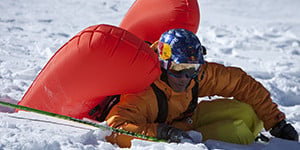


Choose your avalanche safety equipment from the best brands.
Avalanche Safety: Equipment, Tips, and Training
Safety in the mountains starts with preparation and the right equipment. This guide presents essential materials (transceivers, shovels, probes, airbag packs), explains their use, offers training suggestions, and compares products available on the market.
Essential Equipment
Transceiver (Avalanche Victim Detector): an essential device for quickly locating a victim. Practice its use regularly and check battery life and range before each outing.
Shovel: a tool for digging and support. Here’s how to choose a shovel for snow safety: prioritize weight, durability, blade capacity, and ergonomic handle for effective digging under pressure.
Probe: allows precise location after the transceiver signal. If you want to buy an avalanche probe, check the length (240–320 cm), the rigidity of the locking system, and ease of deployment.
Airbag packs: increase the chances of staying on the surface. If you’re looking for freeride gear, consider a freeride airbag backpack suited to your volume and usage.
Guides and Usage Tips
Set and test your transceiver before heading out. In case of burial: 1) set your transceiver to search mode, 2) conduct a wide then fine search, 3) use the probe for precise location, 4) dig quickly with the shovel.
Practice in simulation with your group. Repeat search scenarios (multiple searches, stress management, rescue protocol) to save time on the day.
Quick Comparison and Reviews
For tight budgets, consider alternative solutions for your purchasing plans, such as cheap alpine skis to start, but never skimp on transceiver, shovel, and probe.
Complete your equipment with quality ski accessories (straps, transport bags, lamps) for more safety and comfort on outings.
To buy ski equipment online, check customer reviews, warranty policy, and delivery times. If you want quick choices, check our Ortovox selection with express delivery for tested transceivers and airbags.
Among the recommended products are options from Black Diamond equipment for durability and design, a Mammut climbing and mountaineering collection relevant for high mountain activities, and Scott equipment for skiing and trail suitable for versatile practitioners.
Training and Workshops
Taking an avalanche safety course (transceiver search, probing, extraction, decision-making in avalanche terrain) is highly recommended. Local organizations and guides offer introductory and advanced modules from one day to several days.
Participating in guided outings allows you to practice in real conditions and learn to assess risk, choose routes, and use your equipment correctly.
Specific Purchasing Tips
Before buying an avalanche probe or choosing a pack, test the deployment and maneuverability in-store or during a workshop. If you’re unsure about airbags, compare volumes, activation systems, and recharge options. You can also choose an Arva airbag pack if you want to compare different systems (note: test the activation mechanism under controlled conditions).
For those who want multiple carrying and safety options, look for a freeride airbag backpack with a technical compartment and back comfort.
Encouragements
Training and investing in suitable equipment significantly increases safety. Sign up for a workshop, test your equipment regularly, and discuss with experienced practitioners before exploring a new area.
FAQ
What are the best equipment to protect yourself in case of an avalanche?
A high-performance transceiver, a sturdy shovel, a long probe, and an airbag pack suited to your practice form the minimum kit.
How to use a transceiver in an emergency situation?
Activate search mode, conduct a wide then fine search, follow the indications to the minimum distance, use the probe then the shovel.
Where to train for safety in avalanche-prone areas?
Training centers, off-piste ski schools, high mountain guides, and alpine clubs offer theoretical and practical workshops.
What are user reviews on certain products?
Check community feedback and online comparisons, test in-store, and prioritize reliability and after-sales service.
Need help choosing? Contact a specialist, sign up for a workshop, and equip yourself knowledgeably. Have great outings and stay safe in the mountains.
