
 €
€ Hiking
  Camping
  Trail
Trail  Running
  Mountaineering
  Climbing
  Mountain biking
  Road biking
  Survival
  Canyoning
  Alpine Skiing
  Ski touring
  Snow activities
  Snowboarding
  Cross-country skiing
  Lifestyle





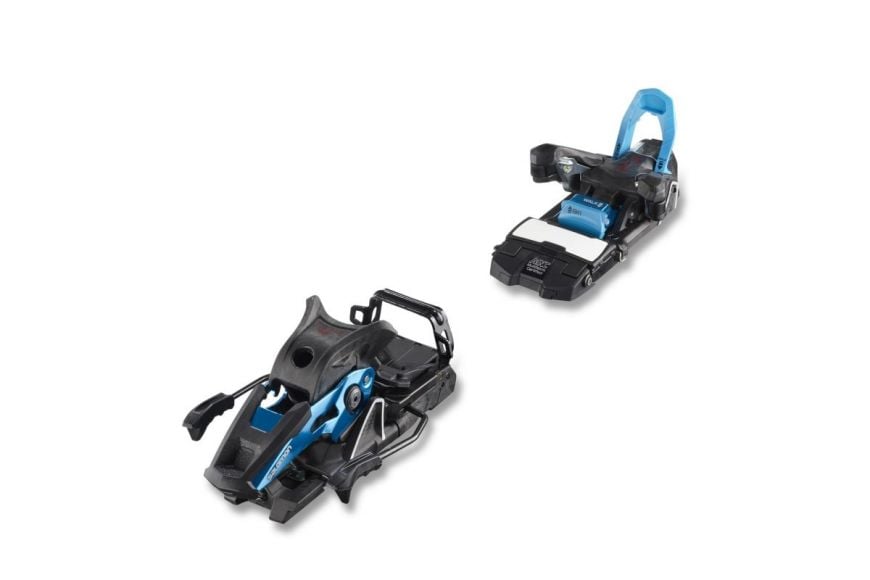
The most commented freeride ski binding from Salomon since its release: the S/LAB SHIFT. It's the binding that blends two worlds. On one side, the safety and precision of an alpine binding, on the other, the lightness and efficiency of a Low Tech binding for the ascent. Do you want to ski from the top of north faces without giving up on touring? It paves the way.
The S/LAB SHIFT from Salomon is designed by enthusiasts, for enthusiasts. On paper, it's a clear technical promise: DIN 6-13, MNC standard, TÜV certification. In the field, it's real: committed outings in powder, quick transitions on the ascent, stability on descents. Greg Hill sums it up well: "The SHIFT allows people to tour and ski off-piste at their best level, without compromise."
Why does this binding change the game?
You want to be able to ascend light but descend confidently: that's exactly what the SHIFT offers. It integrates an alpine heel that locks the support like a traditional binding and a Low Tech insert system at the front to save weight and increase mobility on the ascent. The result: unique versatility when you evolve between piste, route, and technical freeride.
For those looking for economical options to equip their quiver, there are cheap alpine skis that seduce with their performance/price ratio, and that remain compatible with the alpine/freeride usage logic when equipped accordingly. If your goal is to limit the budget without sacrificing technique, we explain how to stay pragmatic.
Synthetic technical sheet
| DIN | 6-13 |
| Standard | MNC (multi-norm certified) |
| Safety | TÜV certified |
| Weight | 1700 g per pair |
| Adjustment range | 30 mm |
| Brake sizes | 90 / 100 / 110 / 120 mm |
| Width of blades | 100 / 120 mm |
| Ascent risers | 2° and 10° |
These numbers already give you an idea: it's a robust binding, designed for heavy and fast freeride while keeping the advantages of a touring binding. The weight of 1700 g per pair remains contained for a binding capable of holding high DIN tolerances.
For whom and how to use it?
You are a versatile skier: you want to hit freeride sessions while keeping the option to ascend using your legs. This is your tool. You are a competitor in freerando and want to reduce the compromise between ascent and descent. This is your tool. You want a durable and secure mount for wide skis: this is still your tool.
If you are starting in committed practice, start by getting advice on DIN adjustment and compatibility with your boot sole. Take the time to check the brake width according to your ski tip. And above all: test the ascent risers to see if 2° is enough or if you should prefer 10° on long ascents.
Buying tips and pack options
We know that freerando equipment can quickly become expensive. To limit the bill, some solutions exist: there are offers for cheap touring ski gear for tight budgets, and bundled offers that combine performance and savings. If you want to go with everything, also look at touring ski packs with bindings to ensure guaranteed compatibility from the start.
You also have the option to buy a complete touring ski pack that includes skis, bindings, and often skins: time-saving, coherent assembly, and often better price than buying separately. Before buying, check the appropriate brake size for your tips and the assembly done by a pro.
- advantages: ascent/descent versatility, high DIN, certified safety;
- to check: weight on the scale, boot compatibility, adjustment and maintenance.
If you hesitate between buying separately or opting for a pack, thinking about your practice guides you: do you want to assemble a very specific quiver, or do you prefer a ready-to-use solution? For those who want to centralize and simplify, it is relevant to choose a complete touring ski pack adapted to your level and outing program.
For small budgets wanting to equip for light touring, there are cheap touring skis that allow entry into the practice without breaking the bank. However, be careful: low-end equipment can limit longevity or performance on difficult snow descents.
Assembly, adjustments, and safety
Assembly: entrust it to a professional who knows the requirements of hybrid bindings. Adjustments: DIN adapted to weight and skiing style. Test: do a field test to validate lateral and vertical release. Maintenance: regular checks of screws and mobility of risers, especially after intensive seasons.
Touring ski bindings require different maintenance than purely alpine bindings: targeted lubrication, checking Low Tech inserts, and vigilance on wear of moving parts. The SHIFT combines both philosophies: therefore, one must be rigorous and technical.
Experience feedback
Outings testify to real confidence on descents, even on steep slopes and variable snow. The transitions on the ascent are quick, and the support retention is sound. For hikers wanting to switch to freeride without multiplying gear, the SHIFT quickly becomes a standard in the backpacks of the intrepid.
If you want to learn how to choose your equipment, our pragmatic advice helps you find the right compromise between weight, safety, and pleasure: from simple and robust touring ski gear to the most committed configuration for technical descents.
Conclusion
The S/LAB SHIFT Salomon is more than a binding: it's an invitation to push the limits of your playground. It speaks to contemplatives as well as intrepid ones, to pure hikers wanting to let loose, and to freeriders wanting to ascend. Choose your adjustment, check compatibility, and enjoy the regained freedom.
Want personalized advice to choose a complete touring ski pack or to find the right touring ski gear? We accompany you: we advise you without bullshit, like friends on a rope team.
Last practical point: if you want to limit the budget without sacrificing quality, also compare pack offers and look at cheap alpine skis or discounted touring skis: but always keep in mind compatibility and safety.
Finally, for fans of all-in-one, we recommend systematically checking options and dimensions before buying: knowing how to choose a complete touring ski pack, understanding the difference between each assembly, and anticipating maintenance will make all the difference on the mountain.
Good outings, caution on slopes, and always seek the balance between efficient ascent and committed descent.

Leave a Reply
All fields are required