
 €
€ Hiking
  Camping
  Trail
Trail  Running
  Mountaineering
  Climbing
  Mountain biking
  Road biking
  Survival
  Canyoning
  Alpine Skiing
  Ski touring
  Snow activities
  Snowboarding
  Cross-country skiing
  Lifestyle






Marker ski binding
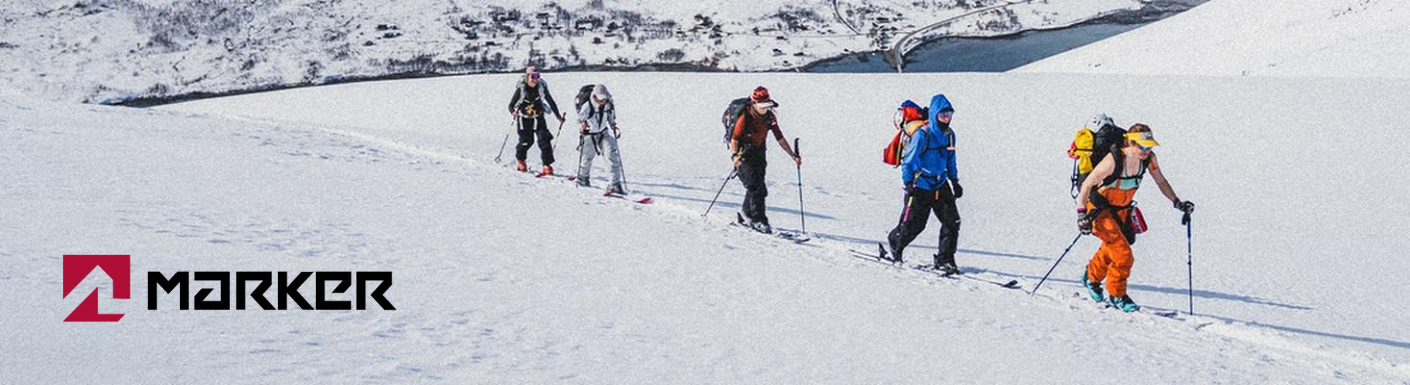
Online store for Marker ski bindings: express delivery. Advice and selection of the best Marker equipment.
Marker ski binding: online purchase at the best price
Choosing the right ski binding directly influences your safety and performance. This commercial and informative guide presents the types of bindings, selection criteria, and a selection of Marker models for all levels.
Types of bindings
- Alpine: designed for piste and all-terrain, prioritizing retention and effort transmission.
- Freeride: more robust, with a high DIN range for jumps and challenging terrain: suitable for long off-piste descents.
- Touring: lightweight, with a walk mode and adaptive releases for ascent and safety in descent.
Selection criteria
- Weight: essential in touring; less important in alpine/freeride where robustness is key.
- Compatibility: check the sole standard and sole length (ISO/ISO 5355, tech/insert depending on models).
- Performance level and DIN range: beginner to expert: choose a DIN range suitable for your weight, style, and speed.
- Options: brake systems, walk/descent locks, tool-free adjustments.
Accessories & equipment
- For touring: consider the Marker touring ski equipment complete, including lightweight bindings and crampons if necessary.
- For freeride: combine your bindings with freeride ski poles and good body protection.
- Don't overlook a selection of suitable ski boots: their compatibility with the binding is crucial for performance and safety.
Comparison of Marker models (examples)
- Marker Griffon: very popular in alpine: good transmission, versatile DIN range, easy to adjust.
- Marker Duke: freeride oriented: robust construction, excellent hold at high energy; this type corresponds to freeride ski bindings.
- Marker Kingpin: designed for technical touring: low weight in walk mode, solid in descent; ideal among Marker touring ski bindings.
How to install bindings correctly
- Check the sole length (BSL) on the boot and compare with the binding range.
- Position the binding on the ski according to the manufacturer's recommendations (indicative mounting point).
- Drilling and screwing: entrust this work to a qualified workshop if you are not equipped; incorrect mounting compromises safety.
- Adjust the DIN value and test the release in the workshop.
If you hesitate between mounting it yourself or entrusting the operation, we recommend professional mounting to ensure safety.
Buying tips
- First determine your main practice (piste, freeride, touring).
- Prioritize compatibility with your boots and style.
- For a complete purchase, consider choosing a ski + bindings pack suitable for your level and use.
FAQ
What are the best ski bindings for my level?
Beginner: alpine binding with low DIN range and simple adjustments. Intermediate: versatility and transmission. Advanced/expert: robust models and high DIN ranges suitable for freeride or aggressive skiing.
How to install ski bindings correctly?
Measure the sole, place according to the mounting point, drill and screw while respecting the torque values, then have the DIN value adjusted. For safety, prefer installation in a specialized shop.
What is the difference between alpine and freeride ski bindings?
Alpine bindings are optimized for precision and relative lightness on piste, while freeride bindings are reinforced to withstand higher shocks and stresses off-piste; they often offer higher DIN ranges.
Want to buy?
Our Marker range offers solutions for every practice. Ask for advice to find the best compromise between weight, safety, and performance: and also find packaged offers if you want to choose a ski + bindings pack with ease.
