
 €
€ Hiking
  Camping
  Trail
Trail  Running
  Mountaineering
  Climbing
  Mountain biking
  Road biking
  Survival
  Canyoning
  Alpine Skiing
  Ski touring
  Snow activities
  Snowboarding
  Cross-country skiing
  Lifestyle





Gibbon — Slackline, straps and accessories
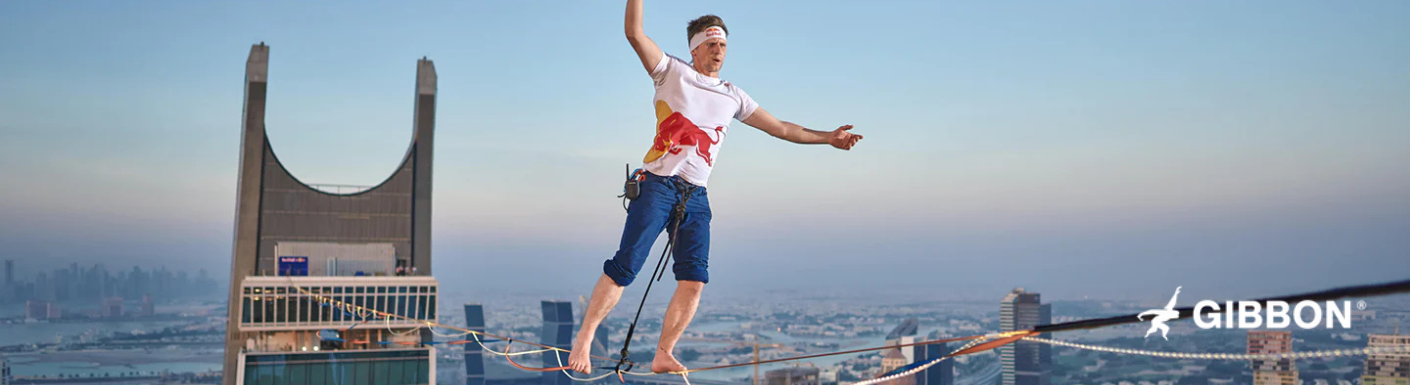
Discover our selection Gibbon : slacklines, kits and accessories to start or progress in slacklining.
Slacklines, slackline kit, accessories, find the equipment you need! 
Slackline: practical and encouraging guide
Slacklining is walking, playing, and focusing on a strap stretched between two points. It is accessible and fun. This guide explains the equipment, types, safety, and basics to get started.
Types of slacklines
- Beginner slackline: wider and lower strap. Ideal for learning balance.
- Trickline / freestyle: tighter strap for jumps and tricks.
- Longline: for long crossings. Requires more experience and sturdy anchors.
- Highline: practiced at height with a complete safety system. Reserved for advanced practitioners.
- Tree slackline: often equipped with anchor protections and a strap suitable for trunks.
Necessary equipment
- Main strap (25–50 mm depending on use).
- Reducer / tensioner (ratchet or friction kit depending on the setup).
- Tree protections to preserve the bark and distribute the load.
- Strong anchor points (trees, poles, or artificial anchors).
- Safety equipment for highlining (harness, lanyards, descenders) if you go to height.
- Accessory cord and carabiners for secondary or backup systems.
Tips for choosing your kit
- Determine your use: learning, trickline, longline, or highline.
- Check the length and width of the strap according to your project.
- Inspect the quality of the tensioners and seams.
- If you have a tight budget, check the offers for cheap climbing equipment, but do not sacrifice safety.
- Before buying, test the grip of the tensioner and the maneuverability of the strap if possible.
- Tips for buying a quality slackline: prioritize robustness, certified anchor points, and suitable tree protections.
Where to practice slacklining
- Public parks equipped with sturdy trees.
- Beaches or open spaces for long lines.
- Artificial structures (poles) when permitted and safety is okay.
- Avoid protected areas or where the strap may damage vegetation.
Safety tips
- Inspect the strap and tensioners before each session.
- Always protect trees with strap covers.
- Do not leave children unsupervised on a taut slackline.
- For highlines, use a backup system and learn safety procedures with a pro.
- Start at a low height. Gradually increase as you master balance.
Basic techniques for beginners
- Place the strap at a low height (30–50 cm).
- Look straight ahead, not at your feet.
- Arms open for balance, knees slightly bent.
- Place one foot, then gently transfer weight onto the strap.
- Practice short steps, half-turns, and gentle stops.
- Repeat often: progressiveness is key.
Benefits of slacklining
- Improves balance and proprioception.
- Strengthens core and leg muscles.
- Enhances concentration and stress management.
- It is a social sport accessible to all ages.
Common mistakes to avoid
- Setting the strap too high from the start.
- Using fragile trees without protections.
- Jumping on a poorly tensioned or worn strap.
- Ignoring backup equipment for highlines.
Visual resources
A summary infographic often helps. Also watch progression videos to see the movements in action.
Recommended explanatory video: look for "beginner slackline" tutorials for visual step-by-step.
Final motivation
Start slowly. Progress at your own pace. Slacklining is as much a physical challenge as it is a game. Enjoy, stay safe, and share your sessions with the community.
