
 €
€ Hiking
  Camping
  Trail
Trail  Running
  Mountaineering
  Climbing
  Mountain biking
  Road biking
  Survival
  Canyoning
  Alpine Skiing
  Ski touring
  Snow activities
  Snowboarding
  Cross-country skiing
  Lifestyle




Comparison of avalanche victim detectors for freeride: guide and field reviews
Let us quickly explain: why an avalanche victim detector for freeride changes everything when you go off-piste. At AlpinStore, we are a small team of seasoned athletes, we test in the field and tell you the truth. Here we compare the most relevant devices for freeride: PIEPS dsp sport, ORTOVOX zoom+, ARVA evo 4, ARVA neo 2, and MAMMUT barryvox. The goal: for you to choose intuitive, robust equipment that will save you time when every second counts.
The principle is simple: you want a device that is quick to handle, reliable in search, and does not waste your time in an emergency. The devices we present are tailored for the freeride audience: ergonomics, range, search band width, and multi-victim functions. We keep the informal tone: we prepare you for the next outing, not for a demo in a store.
Before diving into the technical details, a practical note: when going on a committed hike, you don't settle for just a detector. You think about buying complete ski touring gear: airbag backpack, shovel, probe, and the detector. This avoids regrets later.
Quick presentation of the models: the ORTOVOX zoom+ aims for maximum simplicity with two buttons and an ergonomics designed for immediate handling. The PIEPS dsp sport, aimed at young freeriders, offers a single button and intelligent transmission. The ARVA evo 4 focuses on display clarity and victim marking. The ARVA neo 2 stands out with a wide search width, simple and effective. Finally, the MAMMUT barryvox is the historical tool that has evolved to remain a reference in user-friendliness and performance.
Technical and practical: maximum range and search band width remain key criteria. The wider the band, the more you reduce unnecessary passes in search. Battery life and type of batteries are also to be considered: always start with freshly installed batteries and a spare pair in your bag.
When choosing your equipment around the detector, also think about accessories: knowing how to choose your ski touring poles suited to your style makes approaches smoother and secures your transitions. Similarly, knowing how to choose your climbing skins for touring changes the ascent: grip, glide, maintenance, it’s not trivial.
Some practical tips before heading out: check the transmission mode, do cross tests with a partner, keep visibility on the screen, and train on multi-victim scenarios. We recommend a few quick and repetitive gestures for training: turn on, transmit, switch to search, mark a victim. These gestures should feel natural when you repeat them in cold and stressful conditions.
- test your detector before each outing: transmission and reception;
- carry extra batteries and know the announced battery life;
- training in situation: search simulation with hidden beacons.
The choice of the rest of the gear also influences safety: suitable ski touring bindings, effective ski touring knives for transitions, and balanced skis for descent. If you are a beginner, you can compare models and even look at affordable touring skis to learn without blowing your budget, but without sacrificing safety or weight.
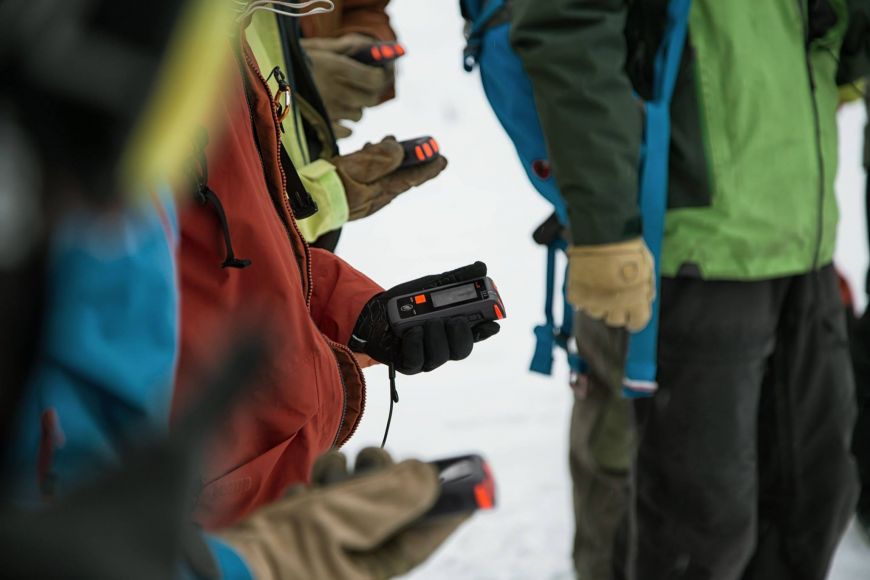
We also talk about ergonomics: a detector should be handled with gloves, without endless digging in the bag. The models presented have been chosen for their clear interface and logical search process. Marking functions and multi-victim guidance save time. This is what differentiates a good tool from a mere gadget.
Field pros know that one device is not enough: coordination, probing technique, and priority management are crucial. That’s why we emphasize training and regular practice. Bring your partner, repeat scenarios, and learn to manage panic. You can never be too prepared.
For fans of responsible gear, we add a point on longevity: prioritize robust, repairable equipment supported by responsive after-sales service. A well-maintained and tested detector is worth more than a promotion on dubious gear. In the end, it’s your search time that matters.
Quick comparison table below: utility for choosing at a glance. The values are indicative and based on our field tests.
| model | antennas | max range | band width | battery life | weight (g) |
| ORTOVOX zoom+ | 3 | 40 m | — | 250 h | 200 |
| PIEPS dsp sport | 3 | 50 m | 45 m | 200 h | 200 |
| ARVA evo 4 | 3 | 60 m | 40 m | 250 h | 220 |
| ARVA neo 2 | 3 | 70 m | 60 m | 250 h | 230 |
| MAMMUT barryvox | 3 | 70 m | 70 m | 300 h | 205 |
In conclusion: choose your detector based on your level and your group. If you want a simple and quick tool, the ORTOVOX zoom+ or the PIEPS dsp sport are very good candidates. If you are looking for range and advanced functions, check out ARVA and MAMMUT. In any case, good equipment starts with good preparation: checking, training, and complementing with reliable avalanche safety gear in your bag.
We remain available to help you in your choice, with field tests to back it up. AlpinStore, we advise you without bullshit, like friends in a climbing team.

Leave a Reply
All fields are required