ski de rando

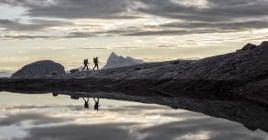
Ski touring is a mountain discipline that combines uphill skiing, with the help of climbing skins, and off-piste descent. Practiced outside marked trails, it offers skiers a unique sense of freedom, allowing them to discover the mountain in its wildest form. This activity is accessible to those who wish to escape the crowds and explore uncharted landscapes, where nature reveals itself in all its splendor.

Ski touring requires a good level of physical fitness and technical mastery of skiing, especially to tackle varied and unpredictable terrains. Unlike alpine skiing, where ski lifts facilitate access to summits, here the effort is intense and the pleasure is earned. This expanding discipline attracts more and more mountain enthusiasts, as it combines physical effort, adventure, and closeness to nature.
However, ski touring is not without risks. Practitioners must master the techniques of ascent and descent in untracked terrain, be able to assess avalanche risks, and know specific safety rules. Much more than just a sport, ski touring is an immersive experience in the world of high mountains, requiring caution, respect for the environment, and preparation.
Practicing ski touring is therefore much more than a sporting challenge: it is an invitation to discover the mountain differently, with an attentive gaze, a sharpened awareness, and a renewed appreciation for the beauty of vast spaces.

Ski touring is an exciting activity that allows you to discover the mountain away from the slopes, but it requires good preparation to ensure safety and enjoyment, including good ski touring equipment. Here are five essential tips for beginners and even for those with a bit of experience:


1. CHOOSE A ROUTE SUITED TO YOUR LEVEL

In ski touring, it is crucial to adapt the route to your technical skills and physical condition. Start with marked and easy routes to familiarize yourself with the effort of climbing and descending on untracked snow. Gather information about the elevation changes and duration to avoid exhausting yourself.

Assess your physical condition and technical level

  • The ascent in ski touring is more demanding than on groomed slopes. Beginners should therefore avoid overly high elevation changes or long distances that could quickly exhaust them. An outing with 500 to 800 meters of elevation gain is generally suitable for beginner skiers, while more experienced hikers can consider elevation gains of over 1,000 meters.
  • Off-piste descent is also much more technical than on-piste, and the type of snow (powder, crusted, heavy) can vary considerably, making turns more difficult. If you are a beginner, opt for gentle and well-cleared descent routes to avoid overly steep areas or those littered with obstacles (like trees or rocks).

Gather information about the difficulty level of the route

  • In ski touring, routes are often classified by difficulty, ranging from easy (gentle slopes, open terrain) to expert (steep slopes, technical passages). Ski touring guides, apps, and specialized websites provide detailed descriptions of routes, with indications on slope, exposure, elevation gain, and potential dangers. This information helps better anticipate efforts and choose routes that match your experience.
  • Ratings, like in mountaineering, can also indicate more technical sections. They take into account the slope's inclination, altitude, and exposure to avalanche risks. For beginners, it is recommended to favor routes rated F (Easy) or PD (Slightly Difficult).

Start with marked routes or accompanied by a guide

  • If you are a beginner, it is wise to start with marked or frequented routes, which offer a more secure environment. Some ski areas offer secured touring routes, where the avalanche risk is controlled. These routes are ideal for training in ascent and familiarizing yourself with the equipment and basic techniques.
  • A mountain guide can be a valuable resource for beginners. Not only does he know the routes suited to your level, but he can also train you in good safety practices and advise you on technical aspects.

Adapt your ambitions according to your progress

  • Ski touring is a sport that requires gradual improvement. Start modestly and increase the difficulty level as you gain experience and improve your physical condition. After a few outings on easy routes, you can consider more complex or longer routes.
  • Note your performances and impressions after each outing to track your progress. This will help you adjust your future outings according to your abilities and goals, and avoid situations of overexertion or danger.

2. EQUIP YOURSELF CORRECTLY


Find the equipment that suits you

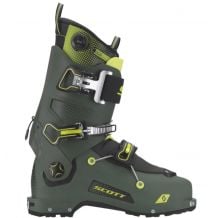
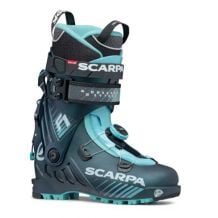
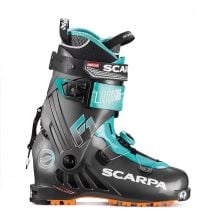
Lightweight equipment is essential to limit fatigue during ascents. Favor specific skis for ski touring, suitable climbing skins, lightweight boots, and adjustable poles.


Ski touring skis and bindings

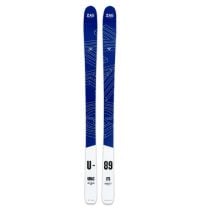
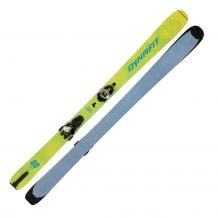
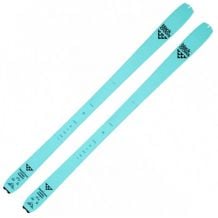
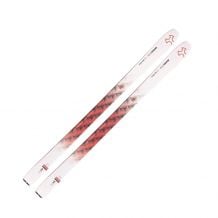
Unlike alpine skis, ski touring skis are lighter, facilitating prolonged ascents. They come in various widths and lengths to adapt to snow conditions and skier preferences. Wider skis offer better flotation in powder, while narrower skis are easier to handle on hard snow. Check out our selection of ski touring skis.

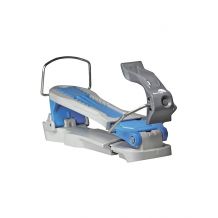
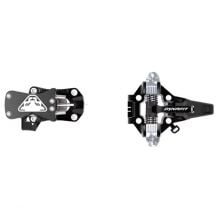
Ski touring bindings are specific, allowing the heel to be released during ascents and fixed during descents. There are insert bindings, which are lighter, and frame bindings, which are closer to alpine bindings but heavier. Choose a binding that matches your level and the type of tours you plan (short or long distances, technical routes, etc.).


Climbing skins

Climbing skins are essential for ascending in ski touring. They adhere to the ski base thanks to a special glue and allow you to move forward without slipping back. They are generally made of mohair, nylon, or a blend of both. Mohair is lighter and glides better, while nylon offers better grip and greater durability. Ensure your skins are well-fitted to your skis to avoid any issues during the ascent.


Adjustable poles

In ski touring, adjustable poles are preferable, as they allow you to adjust their length according to the terrain. For the ascent, a slightly longer pole length is often useful to maximize push, while a shorter length improves stability during descent. Opt for sturdy and lightweight poles, ideally with ergonomic grips and adjustable straps for added comfort.

The importance of safety equipment

Always wear safety equipment: DVA (avalanche victim detector), shovel, and probe. Learn to use them correctly and train regularly.


Safety equipment: DVA, shovel, and probe

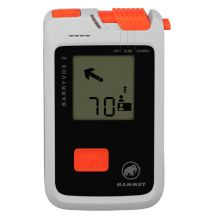
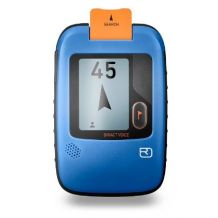
The Avalanche Victim Detector allows you to locate people buried under the snow. Always wear it under your clothing, turned on and well-adjusted. It is essential to know how to use it and to train regularly in victim search.
A lightweight shovel, preferably aluminum, is essential for digging quickly in case of an avalanche. It should be sturdy and ergonomic, with a telescopic handle if possible.
The probe allows for precise localization of a person under the snow after initial detection with the DVA. Choose a probe that is 240 to 320 cm long, easy to deploy, and durable.

These three pieces of safety equipment are essential for any off-piste outing, even for short or reputedly safe routes. You will find your safety equipment from the following brands: Ortovox, Arva and Mammut.

Technical clothing for your ski touring outings

Dress in multiple layers to adjust warmth according to effort. Breathable clothing is important to avoid getting soaked with sweat.


Suitable clothing: the 3-layer system

Base layer: A technical undershirt made of breathable material (like merino wool or synthetic fabrics) to wick away sweat. It is important to stay dry to avoid getting cold in case of a stop.
Mid layer: A fleece or lightweight down jacket to provide warmth. Down jackets are lightweight and warm but less effective in humidity. Some softshell jackets, wind-resistant, are also highly appreciated in touring.
Outer layer: A waterproof and breathable jacket to protect against wind, snow, and moisture. Opt for a jacket with ventilation zips, as the ascent is often intense and causes sweating.
Pants: A pair of touring pants, ideally windproof and water-repellent, with ventilation zips. Some models are reinforced at the bottom of the legs to avoid cuts from ski edges.

Accessories are also essential

Opt for warm, insulated, and water-resistant gloves, as well as a thinner pair for the ascent. Hands cool down quickly in the mountains, so it is crucial to protect them.
Choose a beanie or headband and/or a neck gaiter, which protects the head and neck from the cold. Thin breathable beanies are perfect under the helmet during descent.
The importance of sunglasses and/or ski goggles. The sun's glare on the snow is intense in the mountains. Category 3 or 4 sunglasses are essential for the ascent, and an anti-fog mask is handy during descent in bad weather.
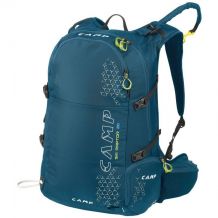
A backpack of 20 to 35 liters is ideal, with straps to secure the skis in "carrying" mode. It should be large enough to hold safety equipment, extra clothing, water, snacks, and a first aid kit.


ski de randonnée


3. MONITOR WEATHER CONDITIONS AND AVALANCHE RISK

Before leaving, check the weather report as well as the avalanche risk level in the region. Avalanches are a real danger in ski touring, and snow conditions change rapidly. If the risk is high, it is better to postpone your outing or choose a secured route.
Monitoring weather conditions and avalanche risk is one of the most important steps in preparing for a ski touring outing. The mountain is an environment in constant evolution, and conditions can change quickly, turning a pleasant route into a dangerous area. Here are the main reasons why it is crucial to be well-informed, as well as the best practices for interpreting and using this information:

Check the weather report before leaving

Mountain weather conditions can vary rapidly, and sudden changes can make progress difficult or even impossible. Before leaving, it is essential to consult a weather report specific to the mountains, available on sites like Météo France or dedicated apps.

Key elements to monitor include:
Temperature: Cold can be extreme at altitude, especially when considering the wind. Low temperatures also increase the risk of frostbite and hypothermia.
Wind: Wind gusts can not only make progress difficult, but they also transport snow, creating dangerous accumulations on slopes, thus increasing the risk of avalanches.
Precipitation: Recent snowfall often increases the risk of avalanches. Indeed, fresh snow needs time to stabilize and form a cohesive snowpack.
Visibility: Snow, fog, or low clouds reduce visibility, making navigation more difficult and increasing the risk of getting lost or straying from the intended path.

Study the avalanche bulletin (BRA)

The Avalanche Risk Bulletin (BRA) is an indispensable tool for all ski tourers. It provides detailed information on the avalanche risk in a given area, ranging from 1 (low) to 5 (very high). This risk level must be carefully analyzed to determine whether conditions are favorable or not.

Risk level: For less experienced skiers, it is advisable to avoid outings when the risk level is above 2 (limited). Even with a risk of 3 (marked), it is recommended to choose routes without steep slopes or low exposure.
Type of snow and stability: The avalanche bulletin also details the stability of the snow (powder, wind slab, transformed snow) and the formation of slabs. Wind slabs, for example, are particularly dangerous as they can easily detach.
Orientation and altitude of risky slopes: The BRA often indicates the altitudes and exposures where the avalanche risk is more pronounced. For example, some north-facing slopes may accumulate layers of unstable snow, while south-facing slopes may be safer after exposure to the sun.

Assess the terrain and adapt your route based on conditions

Even if general conditions are favorable, certain areas are more likely to trigger avalanches. It is essential to identify slopes over 30 degrees, corridors, and areas where snow could accumulate (like depressions or areas under cornices).
On the terrain, observe signs indicating instability: cracks in the snow, low rumblings under your feet, and other clues can signal that the snow is under tension. If signs of instability are present, it is better to turn back or avoid steep slopes.
Also adapt your route based on the orientations indicated as risky in the avalanche bulletin. For example, if east-facing slopes present a risk, favor west or north-facing slopes if they are safer.

Be ready to cancel or modify your outing

Flexibility is essential in ski touring. In case of unstable weather or too high avalanche risk, it is safer to postpone the outing or choose a less exposed route. It is better to give up than to unnecessarily expose your safety.
It may also be wise to prepare several route options: a main route, but also alternative routes of lesser difficulty or better protected, to use in case of deteriorating conditions. For example, opt for a gentler slope or a different orientation if the weather does not match the initial forecasts.

Be attentive to seasonal variations and snow conditions

Snow conditions change with the seasons. At the beginning of the season, the snowpack is often thin and unstable, while at the end of the season, spring snow can be heavy and wet, increasing the risk of wet avalanches.
During or just after a snowfall, the risk is generally higher. Allow a few days for the fresh snow to stabilize. During thaw periods, when temperatures rise sharply, spontaneous avalanches are more frequent.

Exchange with local experts and other hikers

Local experts, such as mountain guides, huts, or other hikers, can provide you with valuable information about current conditions and areas to avoid. In the mountains, information exchange between practitioners is essential, as real conditions may differ from forecasts.

Forums, social networks, or ski touring apps also allow you to consult feedback from other skiers, who can share their experiences and observations in real time.

4. LEARN ASCENT AND DESCENT TECHNIQUES


Ascent techniques: mastering effort and optimizing energy

The conversion technique is essential for climbing steep slopes without slipping. The ascent should be steady, without excessive effort.

The ascent in ski touring is often long and physically demanding, especially on steep slopes and varied terrain. Mastering ascent techniques not only allows you to manage your energy but also limits the risks of slipping and fatigue.

Applying climbing skins
: Climbing skins are essential for ascending. They adhere to the ski base and prevent slipping back. Proper adjustment is crucial: they should cover the ski base without extending over the edges, ensuring good grip without hindering glide.
The duck walk (or stair step) technique: To tackle steeper slopes, position the skis in a "V" (tips pointing outward) and progress by shifting one ski then the other, as if climbing stairs. This technique reduces the risk of slipping and distributes effort better.
The conversion turn: The conversion is an essential technique for changing direction on steep slopes. It involves turning in place by pivoting the uphill ski (the ski on the slope side) in the desired direction, then bringing the downhill ski alongside the other. This maneuver requires some practice to be fluid and stable, but it is essential for advancing effectively on steep slopes.
Regularity of steps: During the ascent, adopt a steady and consistent rhythm, without overexerting, to conserve your energy. Use small steps and adjust your speed to maintain controlled breathing. Avoid taking overly large strides, as they quickly exhaust the legs and are less effective.

Descent techniques: adapting your style to snow conditions
The descent in ski touring takes place on untracked terrain, with a variety of snow types (powder, crusted, heavy, icy, etc.) that require technical adaptations compared to alpine skiing. Here are the key descent techniques to master:

Parallel turn
: The parallel turn is the basic turn for descending in powder or on hard snow. In ski touring, the challenge is to adapt the width of turns according to the slope and natural obstacles (trees, rocks). Wider turns allow for better speed control on gentle slopes.
Body position: In ski touring, weight should be slightly back in deep snow to prevent the skis from sinking too much. On hard snow, adopt a more centered posture for better edge grip.
Short turns: In narrow terrain or dense with obstacles, short and quick turns allow you to maintain speed control. To succeed, engage your knees and hips, and keep the skis close together for a smooth sequence.
Adapting to variable snow: In crusted snow, which is unstable and difficult to maneuver, maintain a slow pace and apply firm pressure to avoid slipping. In heavy snow, focus on wide turns and significant edge pressure to prevent the skis from catching.

ski de randonnée


5. NEVER GO ALONE AND INFORM SOMEONE OF YOUR ITINERARY

For safety reasons, it is highly recommended to go in a group. In case of problems, it will be much easier to manage unforeseen events. Always inform someone of your itinerary and the expected return time.


The advantages of going in a group

Mutual assistance: In case of problems (injury, loss of orientation, changing snow conditions), group members can support each other and provide immediate help. For example, in case of injury, one teammate can alert rescuers while another stays with the injured person.
Sharing responsibilities: Group members can take turns reading the map, monitoring weather conditions, or checking avalanche risk. A well-organized group also reduces mental and physical fatigue, especially during long ascents or technical descents.
Improved safety in case of avalanche: In areas exposed to avalanches, each person can carry a DVA (Avalanche Victim Detector), a shovel, and a probe, which increases the chances of location and rescue in case of a slide. The speed of intervention being essential, a well-equipped group trained in rescue can act effectively.
Encouragement and motivation: In hiking, mental support is important, especially during moments of fatigue or doubt. The group helps maintain morale and motivate each other to reach the goal.

Inform a trusted person of your itinerary

Describe the itinerary precisely: Provide detailed information about your route, including the starting point, the summit or the place where you plan to arrive, intermediate points, and the return route. Rescuers will be better able to orient their search if you do not return on time.
Specify the timings: Indicate the planned departure time, estimated duration, and the time you expect to be back. In case of delay, the informed person can evaluate when to raise the alarm.
Leave instructions in case of no news: Inform your contact of the steps to follow if they have not heard from you by the expected time, such as contacting rescuers or checking with nearby huts along your route. If you have a GPS or a live tracking app, you can also share your location in real time.

Train in first aid and mountain safety

Knowledge of first aid: In case of injury or malaise, knowing how to administer first aid is vital. First aid training adapted to the mountains teaches essential gestures: treating injuries, managing hypothermia, and keeping the victim safe until help arrives.
Avalanche rescue training: Even with a good understanding of avalanche risks, an accident can always occur. Training in the use of the DVA, shovel, and probe, as well as avalanche search techniques, significantly increases the chances of survival in case of a slide. Many clubs and organizations offer avalanche safety training days for ski touring enthusiasts.

BONUS: RESPECT NATURE AND WILDLIFE

Ski touring immerses you in natural spaces that can be sensitive. Respect protected areas, and be careful not to disturb wildlife, especially in winter, when animals are more vulnerable.

By following these tips, you will maximize your safety and enjoyment while respecting the environment. Happy touring and great descents!


contact us