mountaineering

Climbing your first summit in summer is an unforgettable experience. While the weather is generally milder than in winter, high mountains remain a demanding environment where the right equipment is synonymous with safety and enjoyment. To approach this adventure under the best conditions, it is better to be well prepared. Here is a complete guide on what to pack in your backpack.

DRESSING WELL AT ALTITUDE: THE 3 LAYER SYSTEM

In the mountains, temperatures can change very quickly. Therefore, it is essential to adopt the three-layer system. The first layer, worn directly on the skin, should be breathable and quick-drying. Merino wool or technical synthetic base layers are preferred. Cotton, on the other hand, should be avoided as it retains moisture and causes rapid cooling of the body.

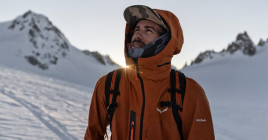
The second layer serves as insulation. It helps retain body heat, even when stationary. A lightweight fleece or a compressible synthetic down jacket perfectly fulfills this function. Finally, the third layer is a barrier against the elements. It consists of a waterproof, windproof, and breathable jacket, preferably with a hood compatible with a helmet.

For the lower body, a technical, stretch, and abrasion-resistant mountaineering pant will be a good ally. It should offer good freedom of movement while protecting against friction and bad weather.

SHOES SUITABLE FOR HIGH MOUNTAINS

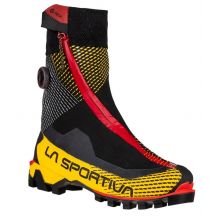
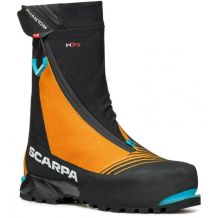
Mountaineering shoes are a key element of your safety. In summer mountaineering, they must provide grip, support, waterproofing, and compatibility with crampons. The choice between rigid soles and semi-rigid soles mainly depends on your level and the type of climb planned.

Semi-rigid soles are ideal for beginners and introductory climbs. They offer more flexibility and comfort while walking while ensuring good stability on scree, snowfields, or easy ridges. This flexibility makes them more versatile for day outings or on less technical routes. They are generally compatible with strap-on or semi-automatic crampons.

On the other hand, rigid soles are recommended for more technical or committed climbs. Their sturdier structure—thanks to a full shank—ensures optimal stability on vertical or very rugged terrain. These shoes are heavier, less comfortable to walk in, but essential for high altitude, glacier climbing, or committed routes. They allow the use of automatic crampons for quick and secure attachment.

Most mountaineering models have a simple construction, similar to hiking shoes but reinforced. Lightweight and thermal, they are well-suited for summer climbs. For more extreme conditions, such as in high mountains or winter, double boots are preferable. Composed of an inner boot and an outer shell, they offer superior insulation and waterproofing, ideal for multi-day expeditions.

The foot morphology also plays a crucial role in choosing your shoes. A good fit helps avoid blisters, friction, and bruised toenails. It is best to measure your feet accurately, especially if you have wide or narrow feet.
Finally, compatibility with crampons is a fundamental criterion. Depending on the presence or absence of front and rear welts on the shoe, you will be able to use strap-on, semi-automatic, or automatic crampons. A shoe without a welt will only accept strap-on crampons, while a model with front and rear welts will be compatible with all types of crampons. This parameter must be checked carefully to ensure your safety on snow or ice passages.

mountaineering

ESSENTIAL TECHNICAL GEAR

Even in summer, some mountaineering routes require basic technical equipment. A helmet is essential to protect against falling rocks or in case of a slip. The harness is used for roped progression and should be lightweight and comfortable. It will also allow you to secure yourself in exposed passages.

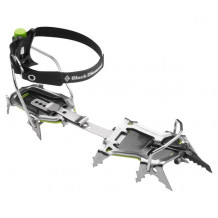
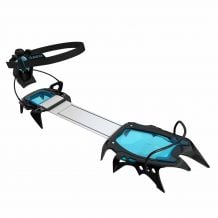
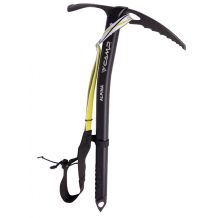
A lightweight ice axe will help you cross snowfields or steep slopes. If it is short, it can also be used as a walking stick. Crampons suitable for your shoes will be necessary as soon as you move on hard snow or icy passages. Remember to practice using them beforehand. You will find what you need from specialist verticality brands: Black Diamond, Petzl, C.A.M.P.

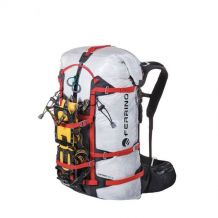
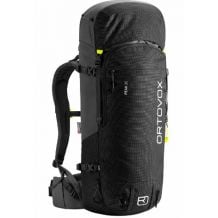
A backpack of about 30 to 40 liters is generally sufficient for a day climb. It should be lightweight, with attachments for the ice axe and poles, and allow for good load distribution.


PROTECTING YOUR BODY FROM COLD, SUN, AND FATIGUE

The mountain is an extreme environment, even in the middle of summer. It is essential to protect yourself from the cold with a lightweight hat, thin gloves for walking, and a warmer pair to wear in case of a gust of wind or a prolonged break. The sun can also be very aggressive at altitude. Category 3 or 4 sunglasses are essential, as well as high-protection sunscreen and lip balm.
Don't forget to bring food and hydration for the day. Plan for at least 1.5 liters of water, energy bars, dried fruits, or savory biscuits to keep your energy and concentration up.
Safety equipment and useful accessories

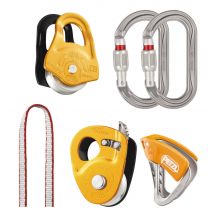
Some climbs, even easy ones, require additional safety equipment such as a rope, slings, carabiners, or ice screws. If you go with a guide, much of this material will be provided, but you should still be comfortable using it.
A first aid kit, a survival blanket, a headlamp with spare batteries, a charged phone (possibly with an external battery), and a map or GPS are essentials. These small items can make a big difference in case of unforeseen events.
 

THE IMPORTANCE OF ROPE IN MOUNTAINEERING

Even in summer, the rope is an indispensable element of your safety as soon as you are on glacial, rocky, or exposed terrain. In mountaineering, the use of double ropes is often preferred, whose two independent strands allow for great versatility in belaying and progression techniques. With a diameter generally between 7.7 and 9 mm, they allow for alternating clipping of the strands, which reduces drag and decreases shock force on anchor points. This is also the type of rope most suitable for rappelling on two strands.

For simpler routes, such as walking on glaciers, a single rope with a diameter of 9 to 11 mm may suffice, provided it remains in good condition and that safety techniques are well mastered. There are also twin ropes, which must be used in double, and which meet specific needs in climbing or adventure terrain.

Maintaining your rope is fundamental. After each outing or significant shock, a visual and tactile inspection is necessary. Particular attention should be paid to the ends, often subjected to falls and belay knots. A rope with a damaged core (crushed or irregular internal part) must be immediately removed from service, even if the sheath appears to be in good condition. However, a superficial wear of the sheath, visible as "fuzz", is not necessarily critical but should be monitored.

To prolong its lifespan, it is essential to protect the rope from direct light, heat, and chemicals. Therefore, avoid storing it in a garage, a car trunk, or near solvents, and keep it out of the sun. During prolonged storage, it is better to leave it loose in its rope bag to avoid kinks.

Finally, a clean rope is a more reliable rope. If it is dirty, you can wash it in lukewarm water (maximum 30 °C), with mild soap or a product specifically designed for this purpose. Well-maintained and used under normal conditions, a rope can last between 3 and 5 years. Beyond 10 years, it should no longer be used, even if it appears to be in good condition.


Should you buy or rent your equipment?

For a first experience, it may be wise to rent some of the equipment, particularly shoes, crampons, the ice axe, or even the helmet. This allows you to test several models before investing. However, technical clothing, which is more personal, should be chosen carefully and can serve you in other outdoor activities.

Climbing your first summit in summer is a motivating and accessible project with good preparation. Equipping yourself appropriately not only ensures your safety but also allows you to fully enjoy this adventure at altitude. In case of doubt, do not hesitate to be accompanied by a mountain professional, and prioritize quality in your equipment choices.

Happy climbing to you!


For more information:  
How to choose your mountaineering clothing? 
How to choose your mountaineering shoes well?
Which ultralight harness to choose for mountaineering?


 mountaineering

mountaineering