€
€ Hiking
  Camping
  Trail
Trail  Running
  Mountaineering
  Climbing
  Mountain biking
  Road biking
  Survival
  Canyoning
  Alpine Skiing
  Ski touring
  Snow activities
  Snowboarding
  Cross-country skiing
  Lifestyle






The different types of HANWAG shoes
"I am going to buy a new pair of hiking shoes." This may seem easier said than done. So, how do you choose the right pair of shoes? You might find yourself faced with a multitude of choices on AlpinStore, where you will also have the option to buy climbing shoes and après-ski shoes. There are lightweight hiking shoes, lightweight trekking shoes, and various models with cut heights ranging from low to high.
We will not dive into the technical details of hiking shoes here (although we could as experts in the field!). Instead, we want to highlight the main types of hiking shoes and explain the distinction between hiking boots and hiking shoes. To complete your gear, also consider complementary hiking shoe equipment that can make a difference during your outings.
The fact that manufacturers use varied vocabulary can sometimes cause confusion. One brand may call its products "hiking shoes," while another opts for "trekking shoes." A store may name products "trekking shoes," while another describes them as "lightweight mountain boots."
In short, if you are wondering how to choose hiking shoes, this is precisely where shoe categories can be useful to you. And to stay light this summer, why not consider lightweight outdoor sandals during your walks?
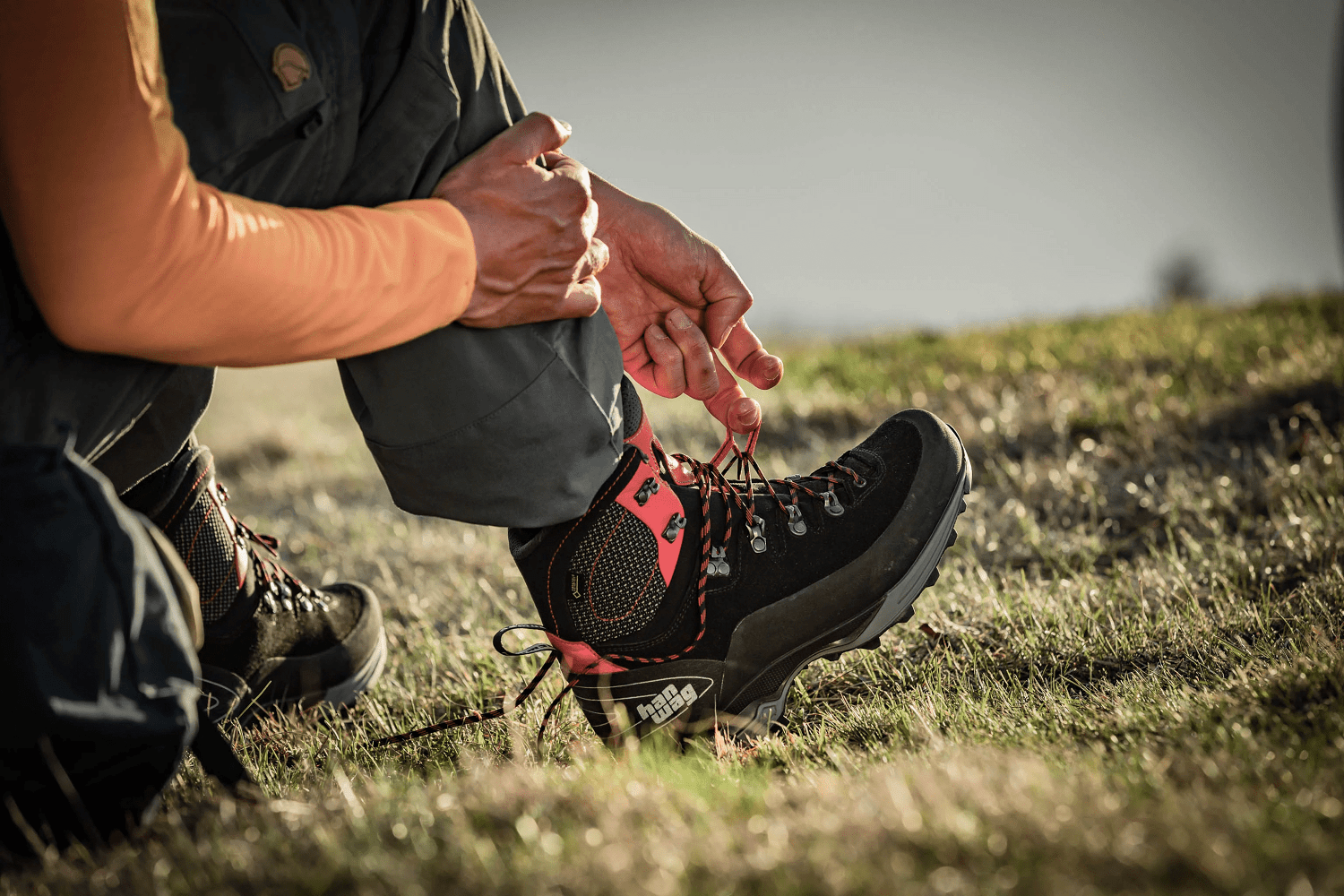
How to choose your hiking shoes – Category A to D
Hanwag has classified its hiking and mountain shoes into categories ranging from A to D. Some models may be on the border of two categories or even encompass two. That’s why there may be annotations for two categories in some cases.
The main characteristic of this classification is the torsional rigidity of the shoe and its flexibility in length and width. This scale ranges from high flexibility (category A) to high rigidity (category D).
A softer sole promotes a better foot roll, which increases walking comfort. Conversely, a stiffer sole offers increased stability and good support, thus ensuring solid grip on rocky terrains or trails littered with roots. If you are looking for a personalized solution, explore high-performance hiking insoles to optimize your comfort.
Shoes designed for outdoor activities are influenced by various factors, such as the height of the shoe's front part. Additionally, personal characteristics, such as foot security, individual physiology, and overall weight, play a crucial role in making the appropriate choice.
To help you, we have divided our hiking shoes into 6 categories:
- Travel
- Hiking
- Light Trek
- Trek
- Rocky
- Alpine
 |
 |
 |
 |

Special case: Category C Mountain Shoes
When considering how to choose your hiking shoes and examining the structure of the scale, you will notice that the higher the category, the taller the shoe will be. However, category C presents an exception to this rule. Some models in this category have a low cut. Why? Because shoes designed for approach are meant for both walking to the climbing point and climbing itself, as in the case of via ferrata or for those looking for everything for hiking in technical environments.
During climbing, ankle freedom of movement plays a more important role than protection against the risk of ankle twisting. That’s why some via ferrata models favor a low cut to provide more mobility to the ankle.
Category C shoes also feature a very rigid sole to meet the precision requirements necessary for climbing on rock. This is why they differ from low-cut models in categories A and A/B, as the latter generally have softer soles for optimal walking comfort.
Additionally, it is worth noting that category C shoes often offer a closer fit to the foot. This feature is important to ensure maximum precision when climbing on rock, especially when using high-performance trekking poles to accompany the effort.
What are lightweight hiking shoes?
When it comes to choosing hiking shoes, more and more hikers are looking for lightweight models. This preference is perfectly understandable. After all, every step we take requires lifting our feet, and every extra gram demands more energy compared to added weight in our backpack.
That’s why most people consider weight as the most important criterion for hiking shoes. This reasoning seems perfectly logical at first glance. Lightweight shoes evoke a light and easy hike, don’t they?
However, there is more to consider when choosing a pair of hiking shoes. After all, a classic pair of trekking shoes with a leather upper (category A/B) may weigh more than a pair of mountain shoes (category C). Several reasons explain this: the upper of some mountain shoes may incorporate a proportion of synthetic materials (which are lighter than leather). Additionally, their stiffer soles are generally thinner (and offer less cushioning).
This means that weight is simply one of many factors to consider when asking which shoes are best suited to your needs. To make the right choice, don’t hesitate to check our high-performance hiking shoes or take advantage of our selection of hiking gear at the best price to accompany your practice!
Which shoe is made for me?
Now, you understand how the different categories of shoes are structured and you have a clear vision of the various types of shoes available. Naturally, there are a whole series of factors to consider to find the perfect pair:
- Height of the shoe's upper: at what level should it stop?
- Specific features: for example, do you need a toe cap?
- Weight: although weight is not the only criterion.
- Usage environment: particularly, the type of terrain plays an essential role.
- Personal factors: the stability of your foot and its shape.
- Weight of your backpack: the heavier it is, the sturdier your shoes will need to be.
- Expected weather conditions: as well as the climate your shoes will have to face.
- Aesthetics: after all, this also matters.
- Fit: this is probably the most crucial factor to consider. The best shoe in the world will only be perfect if it fits your foot perfectly.
Did we forget something? Of course, price also comes into play and it is important to consider the value for money when purchasing your shoes. At Hanwag, all their shoes are made with the best materials and using the most advanced manufacturing techniques.
To summarize all our advice on hiking shoe categories to choose the perfect pair: when in doubt, opt for the higher category. Wearing shoes that do not fit you can lead to excessive fatigue and even cause ligament or tendon injuries. It can also be a wise choice in terms of safety, for example, if you risk twisting your ankle with a heavy backpack. It is better to be over-equipped and have a safety margin for your adventure.
.jpg) | Noé NIVAULT, Buyer at AlpinStore Practice: hiking, cycling, running, crossfit Due to the expertise that Hanwag offers, I find this categorization extremely practical and reliable! It really helps to orient oneself and thus truly meet one’s needs. |