€
€ Hiking
  Camping
  Trail
Trail  Running
  Mountaineering
  Climbing
  Mountain biking
  Road biking
  Survival
  Canyoning
  Alpine Skiing
  Ski touring
  Snow activities
  Snowboarding
  Cross-country skiing
  Lifestyle






Everything you need to know about climbing ropes!
Thus, we will see:
- The different types of ropes
- Technical data
- The coatings
- Which rope for which practice?
- How to maintain your rope?
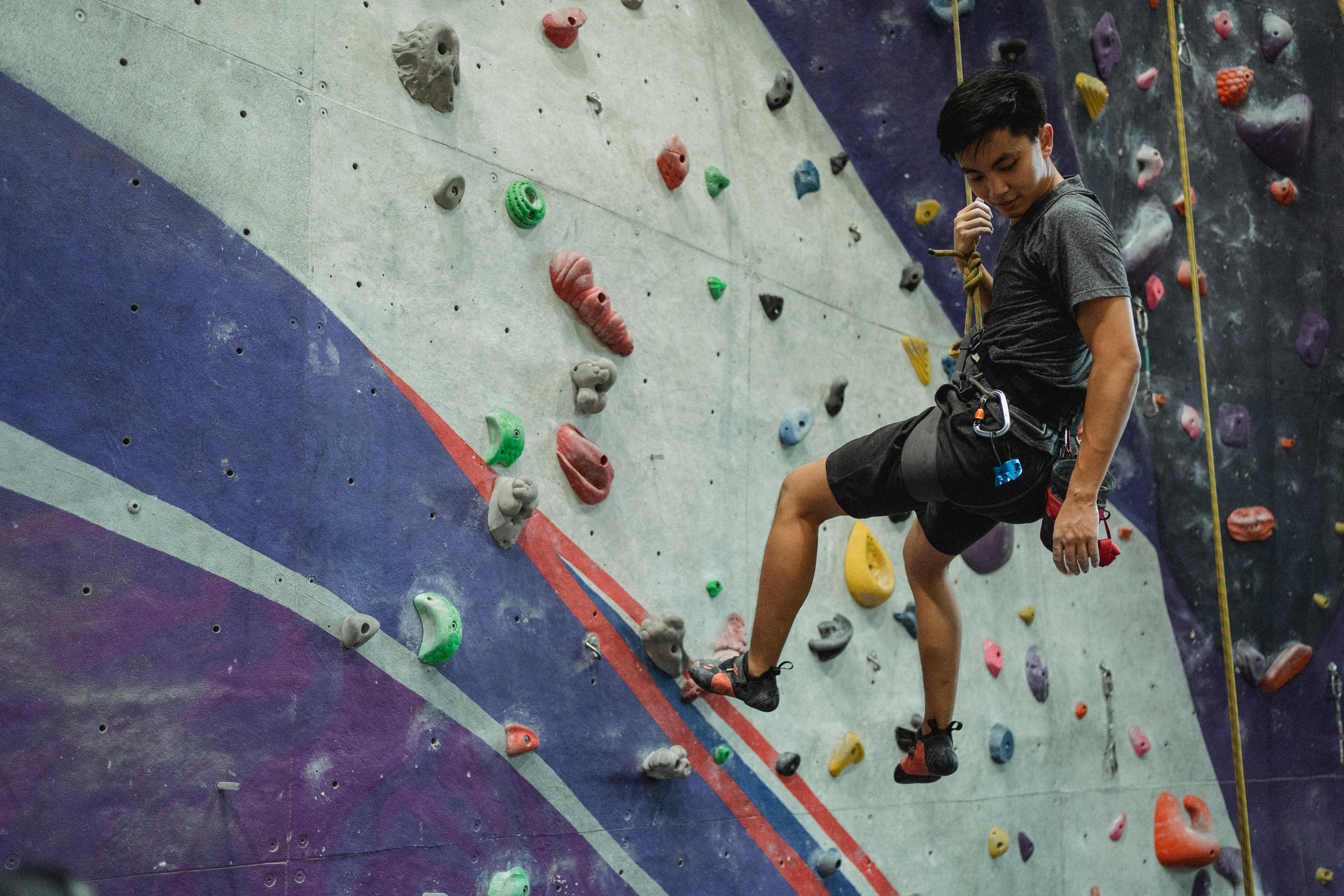
What is a climbing rope like?
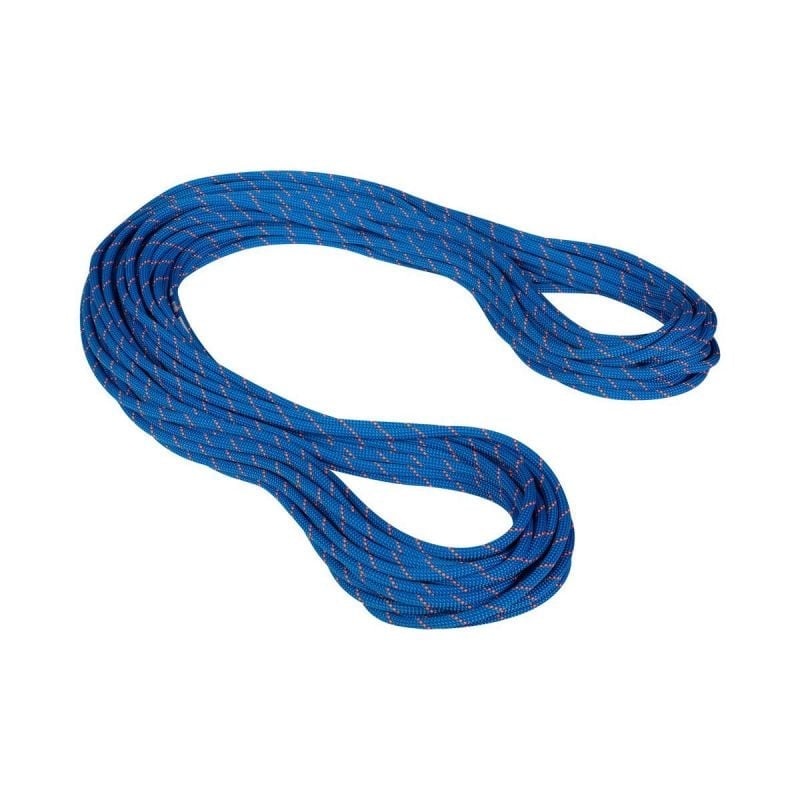
A rope consists of two parts: the sheath (often colored), made of woven synthetic fibers, and the core (in white), made of braided fiber. The threads are made of polyamide to be more durable and rot-proof.
The different types of ropes
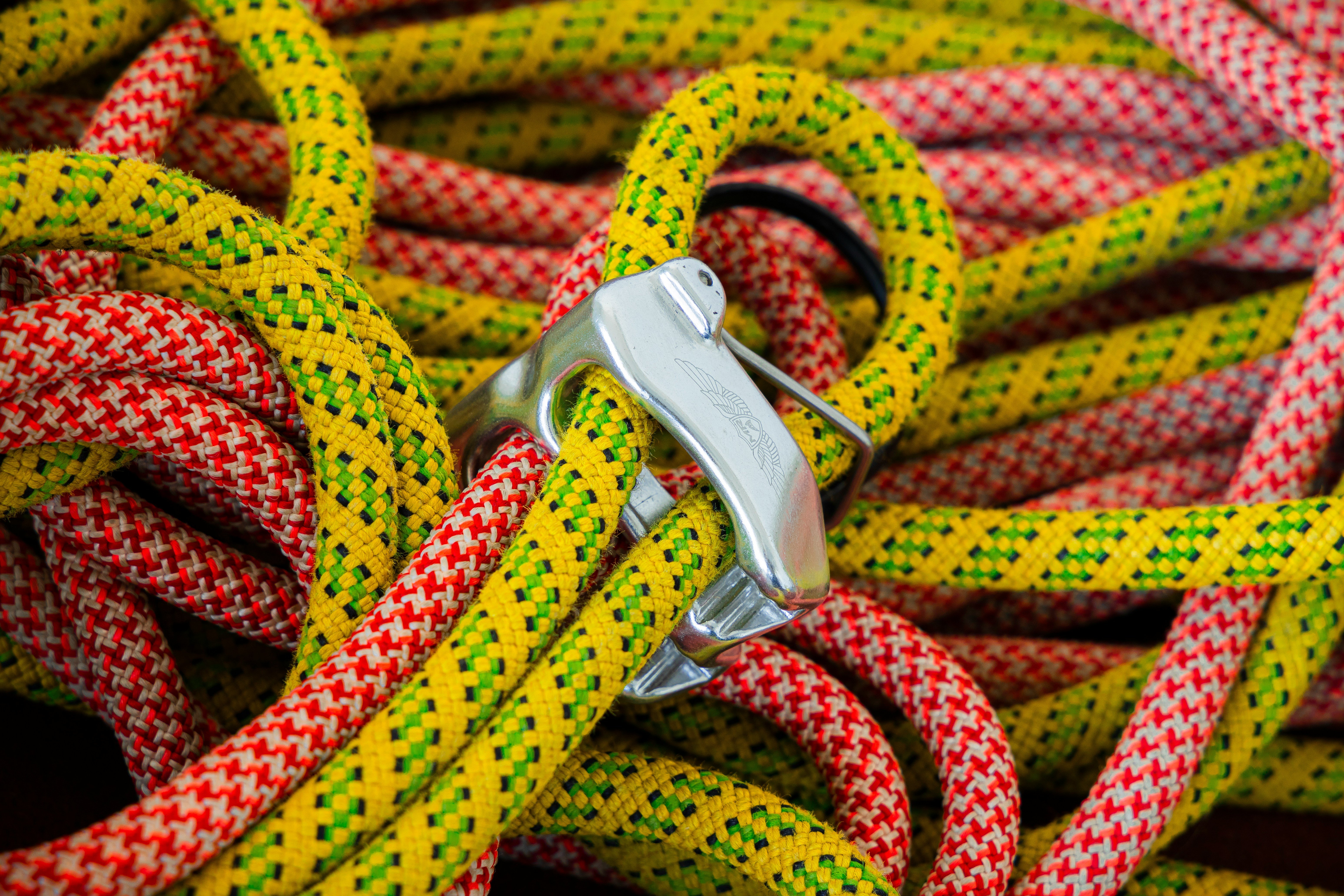
Dynamic ropes:
 |
Single ropes: The athlete's choice!
Recognizable by the symbol  , it is used for climbing multiple lengths (climbing known as "big wall"). The double rope allows climbing on two strands of different colors and descending by "rappelling" the same lengths that were climbed. Much thinner and lighter, its diameter is between 8 and 9 mm for a weight of 40 to 50 g/m per strand. This type of rope also helps limit drag on the ascent, as the two strands are alternately clipped to the quickdraws, allowing for the belaying of two second climbers.
 which require belaying with both strands without separation and must always be clipped together. They can still be used today for glacier belaying or handrails in hiking.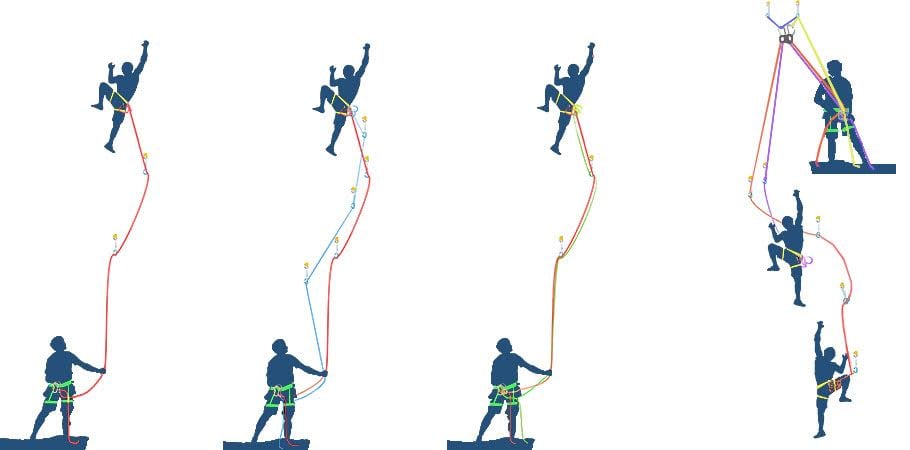
Semi-static and static ropes:
Note that this type of rope is not usable for climbing. As its name indicates, it has no elasticity, to avoid any hip fractures, no ascent with semi-static or static ropes! Certain disciplines such as caving, canyoning, or working at height on rope require rigidity to avoid the yo-yo effect (during descent or ascents on rope). Recognizable by its white color, its elasticity is between 2 and 5% (in comparison, a dynamic rope is usually around 28-35%) | 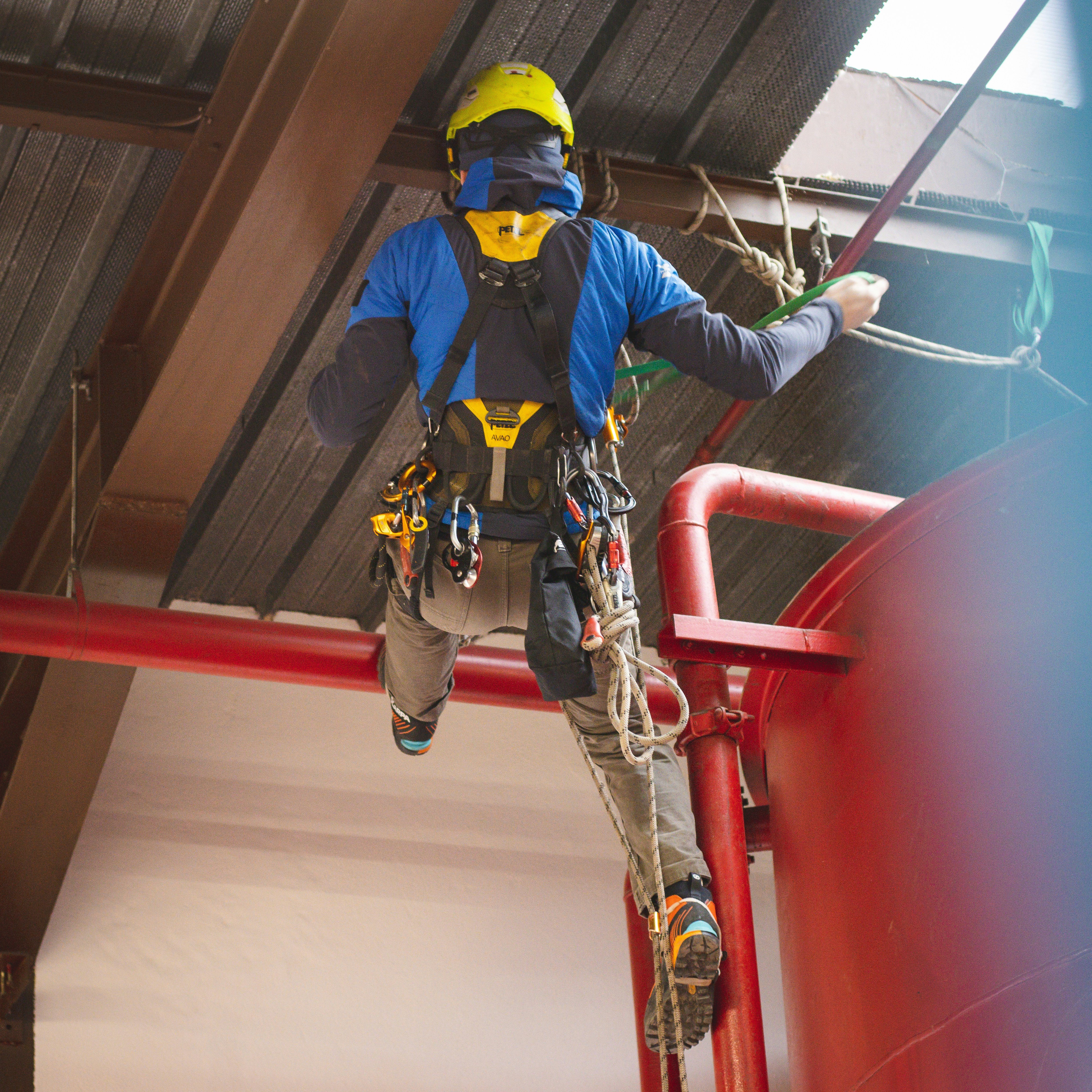 |
Technical data on climbing ropes
Fall factor
The fall factor corresponds to the length of the fall relative to the length of rope available. In climbing, the severity of a fall does not depend on height, as the longer the rope, the greater its absorption capacity.
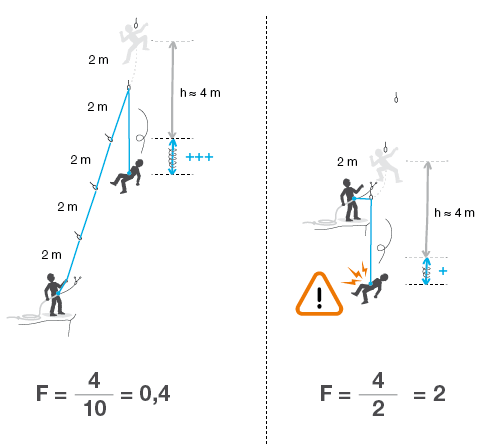 |
In both cases, the height of the fall is the same, but depending on the length of rope available, it will be more severe in case 2 because the rope's absorption capacity is lower than in case 1.
Shock force
The elements taken into account to calculate the shock force are:
- m is the mass of the climber in kg,
- G is the acceleration of gravity = 9.81m/s,
- h is the height of the fall in meters,
- v is the speed in m/s.
This gives us the following formula: Shock force = Mg (1+√(1+2Ks/Mg fc))
- The climber's body which also absorbs energy
- The harness
- The belay knot
- The belay points
- The friction of the rope
- The real fall factor…
 |
Norm 892
Note that depending on the activity practiced, the type of rope is not the same and the maximum shock force allowed by the standard is different.
- Single ropes: 5 falls,
- Double ropes: 5 falls,
- Twin ropes: 12 falls.
Specific treatments for ropes
Treatment of the sheath fiber before manufacturing |
| Increases the resistance to friction and dust of the rope. The rope absorbs less than 15% moisture |
Chemical hydrophobic treatment of the core and sheath fiber before manufacturing |
| Waterproofs the core fibers through polymerization and the sheath, making the rope more durable against water and dirt. It does not freeze and absorbs less than 3% moisture. Meets the UIAA WATER REPELLENT standard |
- Petzl : UltraSonic Finish: the core and sheath are bonded at their ends, thanks to an ultrasonic finish called UltraSonic Finish.
- Tendon : The patented TeFIX® technology permanently binds the sheath to the core.
- Beal: Unicore Technology
 |
Which rope for which practice?
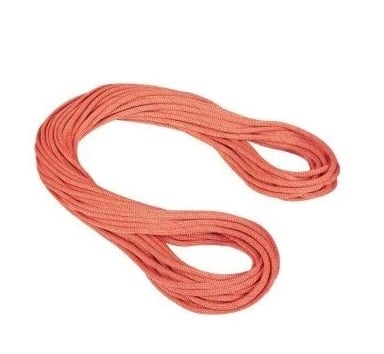
Indoor climbing |
|
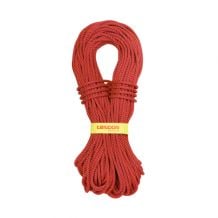
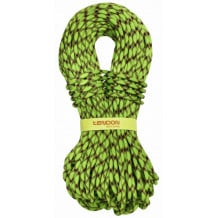
CORDE TENDON MASTER 9.7 STANDARD MAMMUT 9.8 CRAG CLASSIC ROPE |
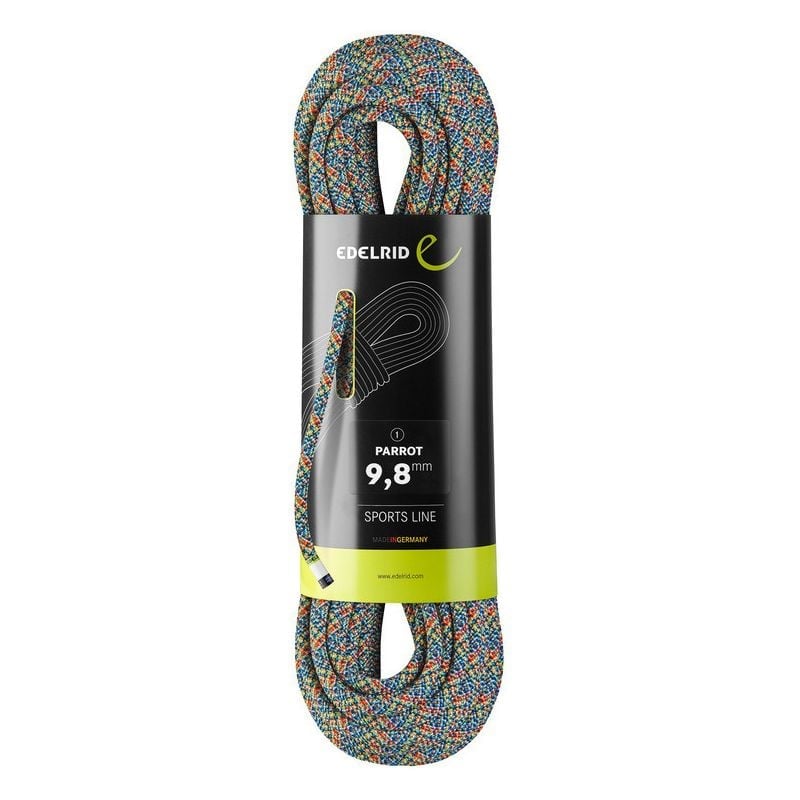
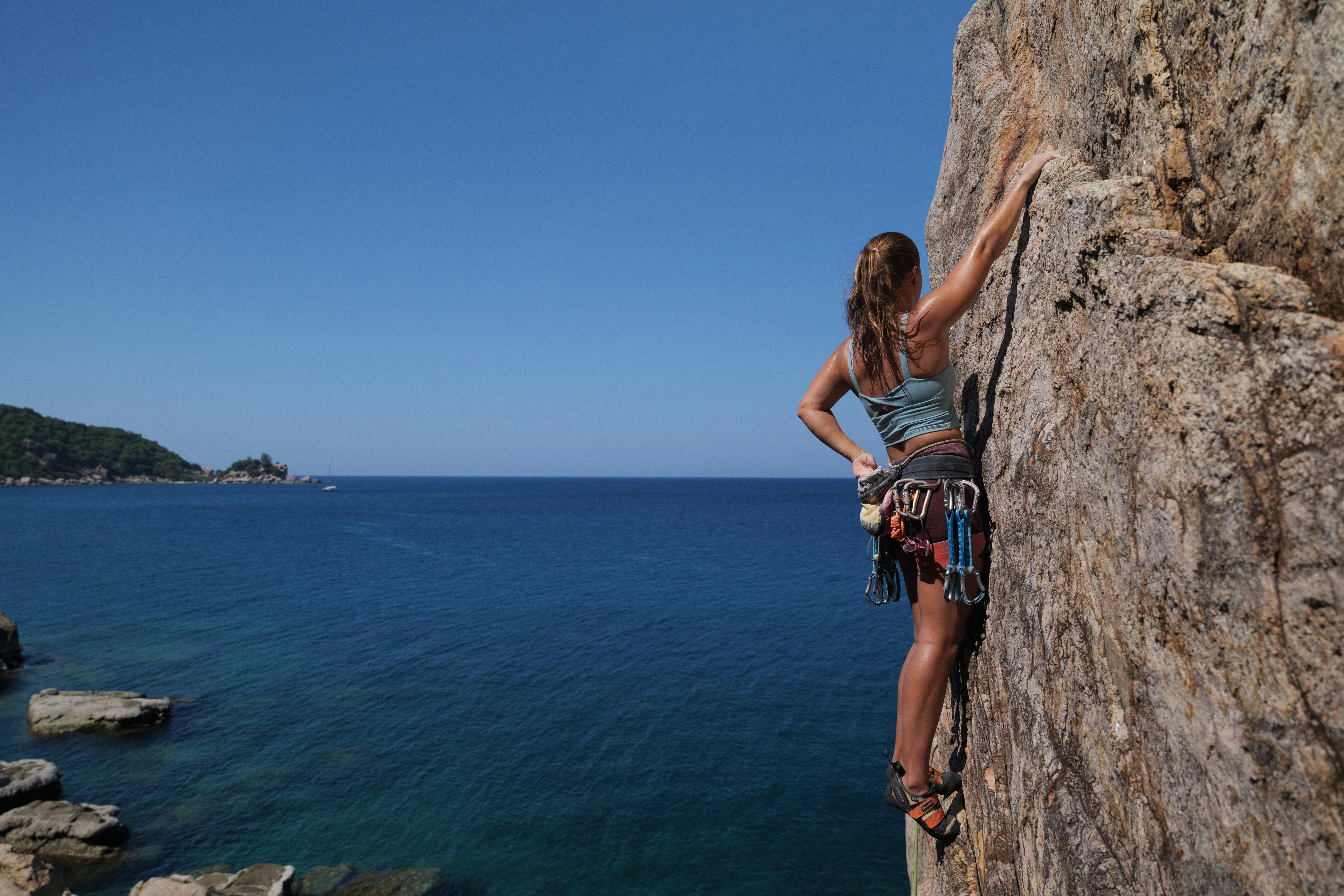
Sport climbing on cliffs |
|
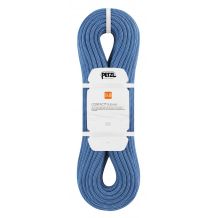
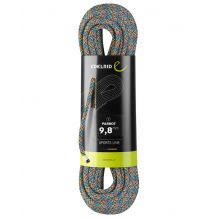
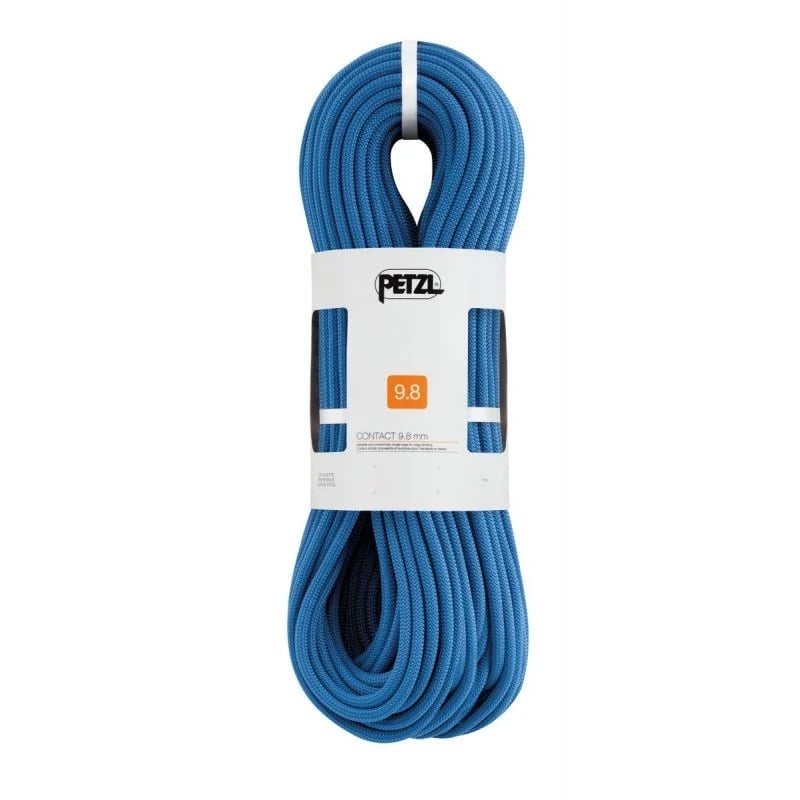
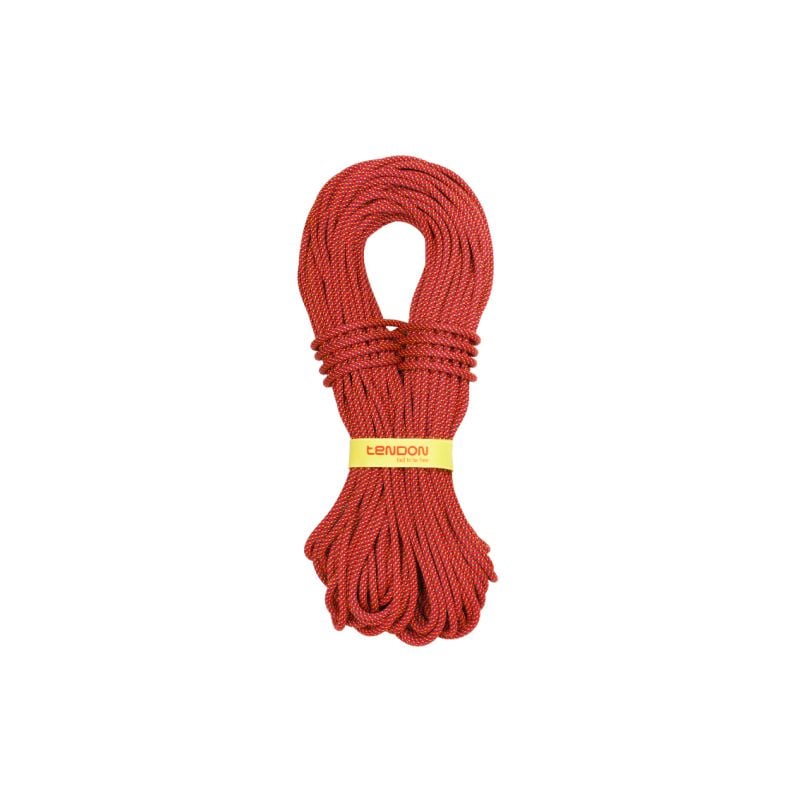
EDELRID PARROT 9,8MM PETZL CONTACT 9.8 MM TENDO MASTER PRO 9.7 |
Multi-pitch and mixed mountaineering |
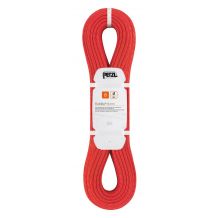
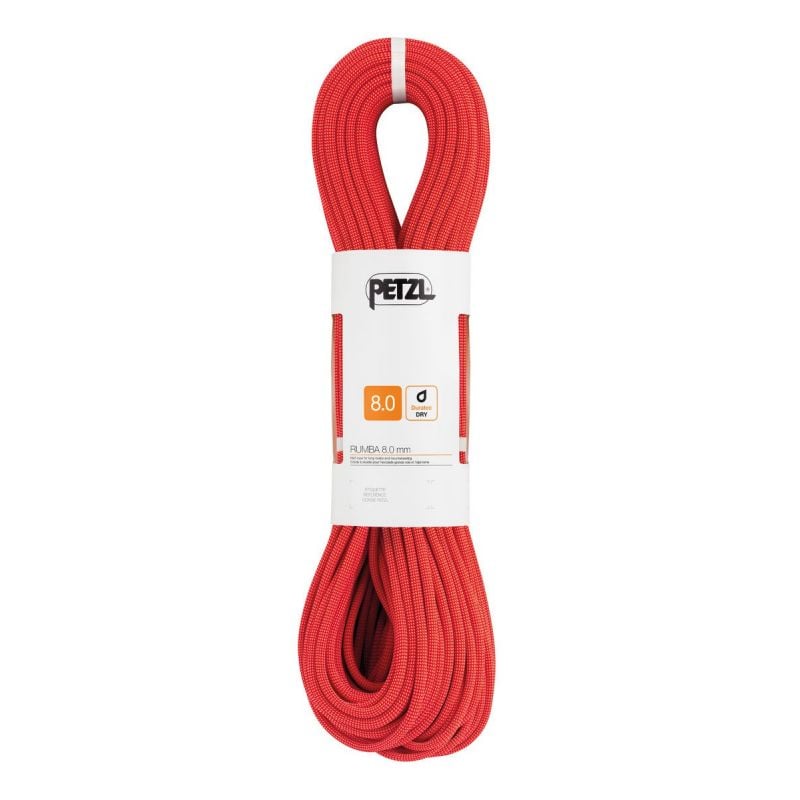
| TENDON AMBITION 7.9 ALPINE PETZL RUMBA 8MM |
Ice climbing |
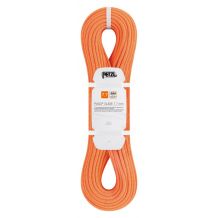
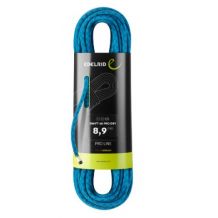
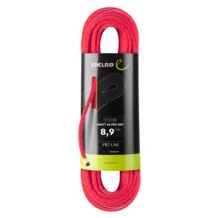
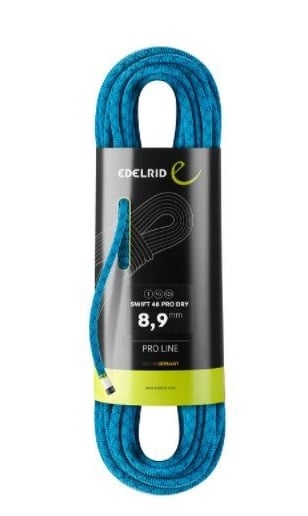
| PETZL PASO GUIDE 7.7 MM EDELRID SWIFT 48 PRO DRY 8,9MM |
Hiking, via ferrata, glacier roping |
| MAMMUT 9.5 CRAG DRY ROPE EDELRID SWIFT 48 PRO DRY 8,9MM |



_1.jpg)
 |
How to maintain your rope?
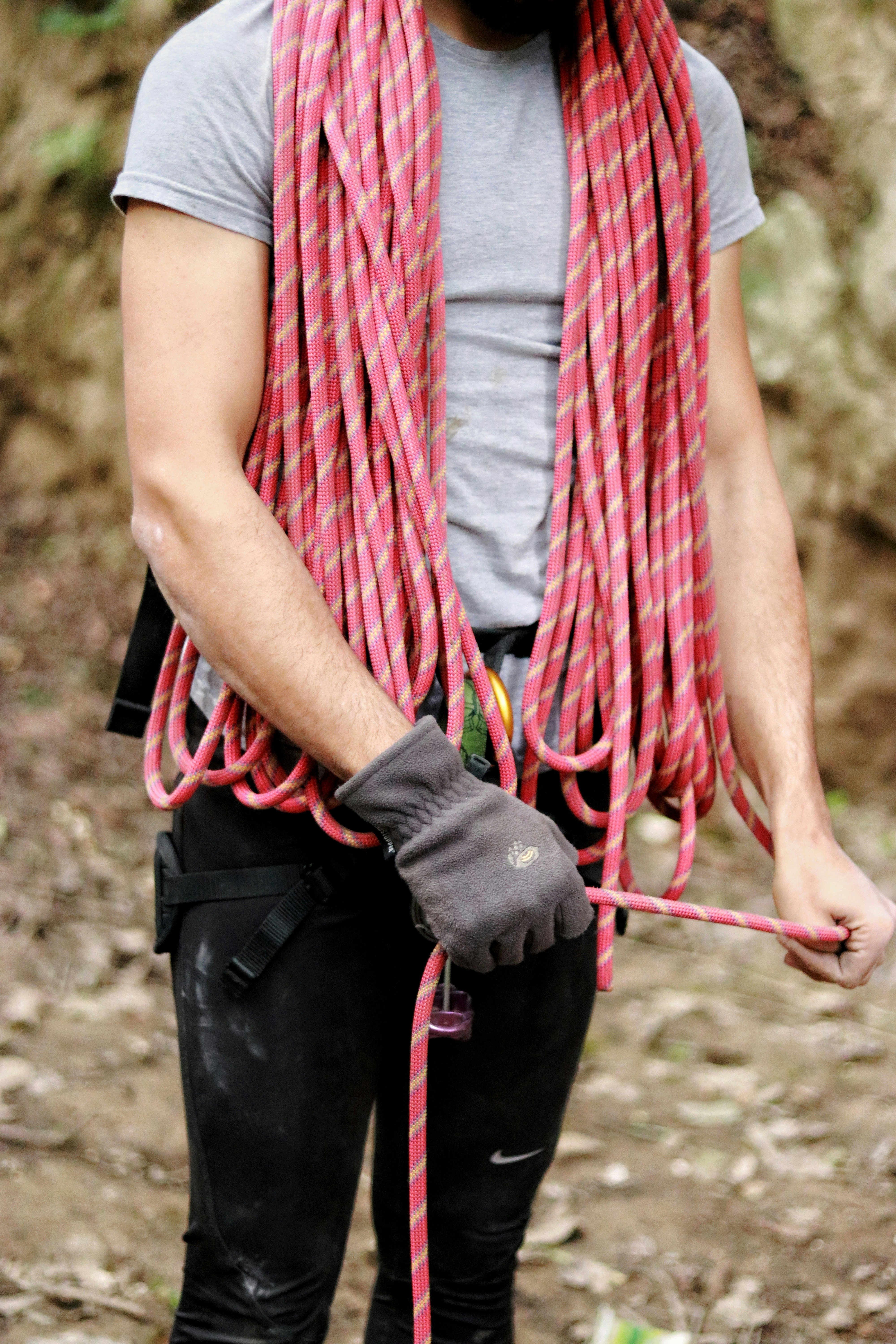
Check your rope:
Storage:
 |
A climbing rope has a variable lifespan depending on the manufacturer, averaging around 10 years. Of course, this should be taken with a grain of salt as nothing beats a visual inspection of the rope. Furthermore, this value decreases with the number of falls the rope has taken during its use.
Another essential element for ensuring a good climbing session? Climbing shoes! If you don't know which one to choose, we guide you: How to choose my future climbing shoes well?