
 €
€ Hiking
  Camping
  Trail
Trail  Running
  Mountaineering
  Climbing
  Mountain biking
  Road biking
  Survival
  Canyoning
  Alpine Skiing
  Ski touring
  Snow activities
  Snowboarding
  Cross-country skiing
  Lifestyle






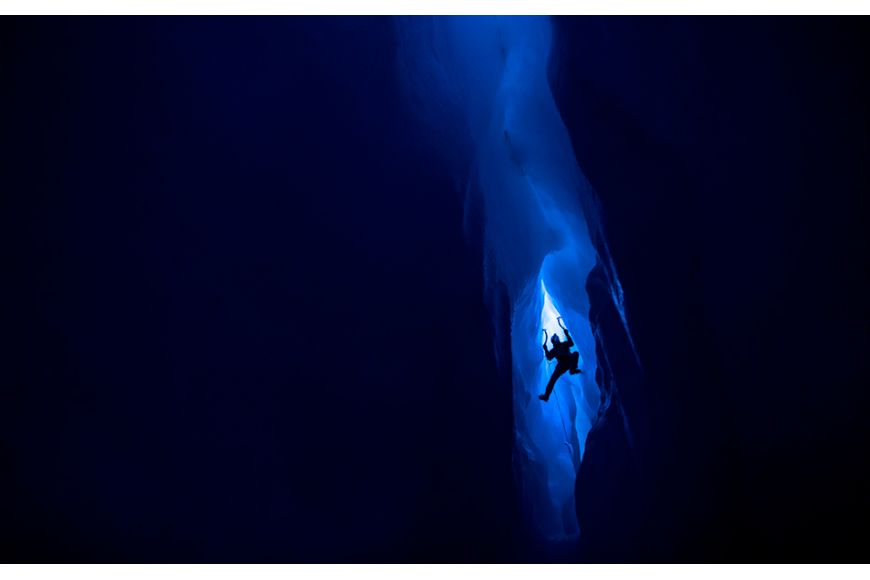
Will Gadd shares his experience as a tester for Black Diamond
Will Gadd is not a casual storyteller. He is an athlete, competitor, and above all, a dedicated tester for over 25 years. A champion of ice climbing World Cups, he has climbed extreme waterfalls and pushed the limits of prototypes that would define decades of gear. This text recounts his story, his frustrations, his joys, and most importantly, his practical lessons for you, the demanding climber.
He recalls the first tools: prototypes of quality alpine ice axes that seemed straight out of a science fiction movie. At the time, the combination of carbon and steel was intimidating. Yet these tools have survived thousands of pitches, from the fjords of Norway to the faces of Canada. Will speaks of these ice axes as almost living objects, tools that have been part of his adventurous life.
Will's narrative is not just nostalgia. It is a manifesto on methodology: how to design, how to break, how to rebuild. He explains that testing means pushing the gear to its limits in real conditions, not just in a lab. It’s about hitting, diving, chopping, planting, jumping, and coming back to report every detail to the engineers. And then there are the failures: a series of points that crack, a plastic part that fails. These moments forge improvement.
A striking passage: the story of the crampons he affectionately called "Tuna." During a long and committed solo, one of the front points began to lose grip. After dozens of perfect pitches, the failure occurred. Will recounts the fear, the adrenaline, and the anger. This test feedback was scathing. But it is this type of honesty that pushes design further. If you want to buy climbing gear, remember that behind every product that holds up, there is a foundation of painful and sincere testing.
The relationship between a climber and their tool is sacred to Will. He keeps his first ice axes, like one keeps road trip memories. Each tool tells a story: the beloved route, the fall avoided, the buddy who belayed you when it became possible to let go. These objects are material memories and witnesses of human performance.
Will also emphasizes the importance of demanding quality across all equipment: from alpine crampon gear to the most mundane strap. A small defect in a secondary component can propagate and turn an ascent into a nightmare. Engineers who listen to athletes know that the real stress comes from the terrain: wet ice, cold, repeated impacts, and reduced weight that sometimes equates to fragility.
He recounts how a quality manager literally tested a prototype against a concrete curb. The scene is almost violent: pieces of carbon, shards, dust. And yet the head remained intact. This anecdote illustrates two things: the necessary brutality of testing and the almost sadistic humor that can animate the teams. But the goal remains the same: to ensure that the product survives real combat.
Over the years, testing methods have become more sophisticated. But the spirit remains unchanged: involve athletes as test pilots, push to the breaking point, and maintain a field requirement. Will also talks about prototypes that never failed, incredible pieces of engineering that he could not push to the limit. These silent victories are just as important as corrections after failure.
In his daily testing, he touches everything: alpine ice screws, ice axes, crampons, carabiners, and textiles. He reminds us that choosing the right accessory can change an ascent. That’s why he insists on seeing, touching, and especially using the product on the real slope before validating it for production. Honest and sometimes brutal feedback is the best guarantee for the end consumer.
Will also discusses the complete product chain: from concept to testing field, then to feedback. He emphasizes the need for quality alpine accessories to complete a high-performing set. A screw that turns poorly, a movable point that bends, a belayer who doesn’t understand the logic of use: all of this can compromise an ascent.
Technically, he reminds us that alpine gear must be thought of as a system: ice axes, crampons, clothing. He mentions that technical alpine clothing is not limited to warmth or cold but integrates mobility, compatibility with the harness, and durability. A zipper that jams is an unnecessary surprise at high altitude.
His message is also educational: testing means putting oneself in the shoes of end users, anticipating extreme scenarios, writing control procedures, and renewing tests after modifications. In this work, humility and tenacity count as much as testing tools. The goal: to offer quality alpine gear that does not cheat on the promise of use.
Near the conclusion, he shares practical advice: how to read a technical sheet, which elements to prioritize based on terrain, when to favor lightness versus robustness. He also discusses the moral responsibility of designers: to make outdoor activities viable and safe for future generations, an idea that runs through his discourse, simple and direct.
- Testing principles: push to the breaking point, repeat in real conditions, gather brutal but constructive feedback
- Buying advice: prioritize reliability, check field tests, compare athlete feedback
In conclusion, Will considers himself lucky. He continues to chain tests and dream of new lines. His testing notebook is a living manual: it reminds us that gear becomes history when it has been tested. If you want seriousness, look for quality alpine gear; if you want dreams, follow the tests of those who seek it on the ground.
Finally, his last lines are almost a wink: after so many innovations, there remains one piece for him to optimize: the screws, the finish, the lifespan. It’s a reminder: even the best innovations can still improve. And that’s what drives the practice forward.

Leave a Reply
All fields are required