€
€ Hiking
  Camping
  Trail
Trail  Running
  Mountaineering
  Climbing
  Mountain biking
  Road biking
  Survival
  Canyoning
  Alpine Skiing
  Ski touring
  Snow activities
  Snowboarding
  Cross-country skiing
  Lifestyle






When considering equipping yourself for your next snowboard season, it is essential to think about affordable snowboard gear to make the most of the ride without sacrificing quality. The choice of bindings is one of the most important aspects. There are different types of snowboard bindings, but quick snowboard bindings stand out for their practicality and speed of use. We will discover together what a quick snowboard binding is and compare the different models available on the market to help you choose the one that suits you best.
What is a quick snowboard binding?
A quick binding is a type of snowboard binding designed to facilitate the putting on and taking off of boots on the snowboard, thus avoiding many manipulations. Unlike traditional bindings that require bending down to adjust the straps and buckles, quick bindings are designed to allow for easier entry and exit.
These bindings generally use a quick-release mechanism that allows riders to slide their foot into the binding without having to kneel or sit to adjust the straps. Once the foot is in place, the release mechanism locks to keep the foot securely in place.
.png) |
What are the main brands and bindings?
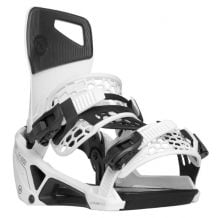
Flow bindings
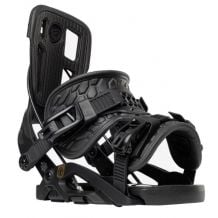
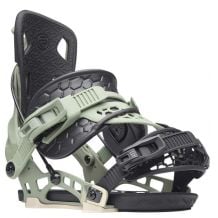
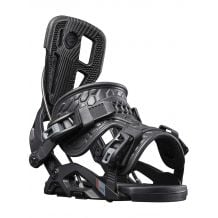
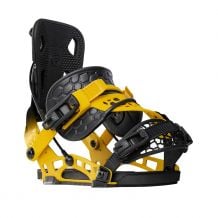
Flow bindings, also known as rear-entry bindings, are a revolutionary type of snowboard binding that was introduced to the market in the 1990s. The key innovation of Flow bindings lies in their easy entry system, which allows snowboarders to strap in quickly without having to sit down or kneel to attach their bindings.
The history of Flow bindings dates back to 1992 when the founder of Flow, Martin Gallant, designed the first prototype. These bindings were characterized by a foldable rear strap, allowing the snowboarder to simply slide their foot into the binding from the back, fold the strap, and thus secure their boot quickly and easily.
Flow bindings quickly gained popularity due to their practicality, especially for beginners who often find it tedious to attach traditional bindings. However, they have also sparked debates among more experienced snowboarders regarding their performance and control.
Over the years, Flow binding technology has evolved to improve responsiveness, lightweight, and comfort. Many snowboard gear brands have developed their own versions of Flow bindings while maintaining the fundamental idea of quick rear entry.
The Supermatic from Nidecker
The Nidecker Supermatic binding is a revolution in the world of snowboarding, being the first universal automatic binding with dual entry. Unlike many previous unsuccessful attempts, the Supermatic does not require specific boots, works well in powder, and offers the comfort and reliability of a two-strap binding.
The Supermatic is made with high-quality materials, such as fiberglass-infused nylon for the base, a Slip-N-Grip plate to facilitate foot entry, and a heel roller to simplify the boot insertion process. Additionally, the Asym Hadron nylon spoiler provides a perfect fit, responsive flex, and a forward lean adjuster for complete customization.
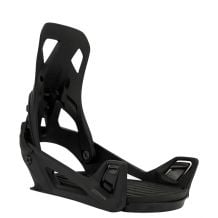
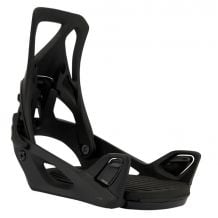
The Step On from Burton
The Step On® system from Burton was created following the challenge launched by Jake Burton Carpenter in the early 2010s to develop easier-to-use snowboard bindings and boots, to enhance learning and enjoyment of snowboarding. After five years of research and development, the Step On system was launched in 2017.
This system consists of snowboard boots and bindings specially designed to be used together. It anchors the boot to the binding via three locking points: two front clips and one heel clip. The front clips located on the front of each boot align perfectly with Burton's Step On front hooks, providing maximum responsiveness at the toes. At the same time, the heel clip of the boot locks into the rear hook of the binding using a release lever for quick entry and exit. This system offers ease of use, comfort, and performance for snowboarders.
.png) |
What are the different types of bindings?
All snowboard bindings are designed to be versatile and capable of adapting to different types of terrain. However, some bindings offer better performance when it comes to executing technical tricks in a snowpark, while others perform better when tackling couloirs, steep slopes, or powder fields. This change in performance is due to several factors, primarily the flexibility of the binding but also the shape, height, or tilt of the spoiler.
Freestyle snowboard bindings
Freestyle snowboard bindings are usually characterized by their flexibility, comfort, and cushioning. They often feature asymmetrical spoilers with a hollow profile to enhance flexibility and lightweight, aiming to provide maximum mobility. Shorter spoilers offer better tolerance and generally greater freedom of lateral movement. They are perfect for adjusting your grabs or executing presses without requiring excessive effort on your bindings.
Freeride snowboard bindings
Freeride bindings are specially designed to provide optimal control and responsiveness to the snowboarder, ensuring impeccable performance in technical sections. These bindings are characterized by their increased rigidity, reinforced by the use of robust materials, as well as by higher spoilers. They are primarily aimed at experienced snowboarders who prioritize powerful riding, requiring more intense physical involvement, leaving no margin for error. For optimal off-piste performance, it may be wise to choose a complete freeride snowboard pack based on your practice.
All-Mountain or versatile snowboard bindings
Versatile bindings, also known as All-Mountain bindings, offer a perfect balance between the two extremes. Their intermediate flexibility level makes them soft enough to enjoy freestyle while providing the support and precision required to navigate various types of terrain. These bindings do not have a specific preferred terrain, making them suitable for a varied day, allowing navigation between fresh snow, carving, and snowpark without compromise. For those who enjoy groomed runs or varied terrain, finding a selection of bindings for piste and all mountain can help you choose your gear better.
It should be noted that there are no established rules and that each rider will have their preferences and will feel comfortable with certain bindings while others may not. Snowboarding is primarily a matter of personal feeling, and our best advice would be to experiment with different models before making a purchase, to better understand your own preferences and expectations.
Which quick binding for which practice?
At Flow, you will find the binding suited to your needs!
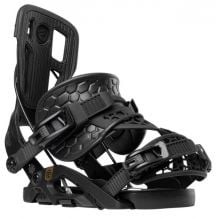
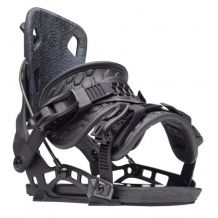
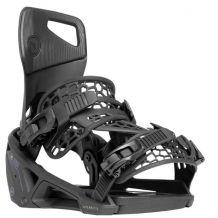
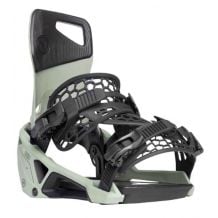
Flow has been established in the snowboard binding market for many years, and their technology has been adopted by the snowboarding world, which is why they have created numerous models that can suit all levels and all styles. The Fenix will be an intermediate binding suitable for all terrains while the Nx2 Hybrid will delight advanced/expert levels looking for a binding capable of handling powerful pressure.
Also, consider complementing your gear with quality snowboard accessories to make the most of all your outings in the mountains.
The Supermatic from Nidecker, an excellent versatile binding!
This binding is classified as mid-stiff and is considered by the Nidecker team to be the most comfortable to date. It has been tested in various conditions, from groomed runs to steep freeride lines and parks, by different types of riders, and has proven to be a reliable quick entry system. Whether you are tired of adjusting straps or want to save time on the ski lift, the Supermatic represents the future of snowboarding
The Step On from Burton, bindings that will suit everyone!
Burton has created 3 models of Step On bindings to match every riding style. The first model is the Step On, a model focused on piste for intermediate snowboarders who want to prioritize comfort and practicality. The Step On Genesis binding offers comfort, performance, and practicality for demanding riders who have an All-Mountain practice. The high-end model in the Step On range, the Step On X, is made from Nylon and Carbon to be able to engage strongly in descents. This binding will excel in carving on piste as well as in large powder fields for advanced/expert snowboarders looking for sensation and pleasure. Demanding enthusiasts can also compare affordable snowboard bindings to equip their boards for all disciplines.
Are bindings compatible with all boards?
Once the binding model is chosen, it is important to ensure that it is compatible with the different insert systems. There are 4 different systems:
The 2x4 system (2 x 4 cm) is widely used in the snowboard industry. These dimensions correspond to the vertical distance between each insert hole, which is 2 centimeters, and the spacing between the two rows of holes, which is 4 centimeters, in the width of the board. Generally, boards with this system offer 12 holes for each binding, making them compatible with most bindings.
The 4x4 system (4 cm x 4 cm) has strong similarities with the 2x4 and its mode of operation is identical. By placing the binding disc above the board holes, generally numbering 6 per binding, you have the option to adjust them according to your preferences. Just like the 2x4 system, the 4x4 inserts are compatible with most bindings available on the market, except for Burton EST bindings.
Increasingly rare, the Burton 3D inserts were originally designed for Burton boards. This triangular-shaped system does not fit with 2x4 or 4x4 binding discs and requires the use of a specific disc. However, most manufacturers include compatibility discs with their bindings, allowing you to mount them on a board equipped with the Burton 3D system.
The The Channel system, formerly known as ICS, is a patented technology developed by Burton. It is easily identifiable due to its long and narrow notch designed to accommodate each binding. Exclusively available on Burton boards, The Channel system offers a multitude of options to adjust your riding position according to your preferences.
You will find a table below listing the compatibility of bindings with different types of inserts.
| Flow | Supermatic | Step On | |
| 2x4 System | X | X | X |
| 4x4 System | X | X | X |
| Burton 3D Insert | X | X | |
| The Channel System | X | X | X |
Discover our selection of snowboard boards or explore the choice of snowboard boards to find the board suited to your style!
How to use the different bindings?
Flow bindings, everything is about the spoiler!
Flow brand bindings are rear-entry bindings, and using them is quite simple. First, you need to open the spoiler of the binding to create space at the back of it; once this space is opened, you just have to slide your boot into the binding and then raise the spoiler to close the binding. When you want to remove your foot from the binding, you do exactly the same: open the spoiler, take your foot out of the binding, and then raise the spoiler. This quick rear-entry binding requires a few manipulations but saves time compared to a traditional binding.
.png) |
The Supermatic, just a heel click!
For the Supermatic binding, it's even simpler! You just need to insert your foot from the back of the binding and press the heel pedal to activate the binding automatically. Once done, you are ready to hit the slopes on your snowboard. For a quick exit, just use the release lever. The straps are designed with the same comfort AuxTech as the brand's classic high-end bindings. Adjust them to your preference once, then lock them using the locking clips for a perfect fit every time. If the conditions on the slope or snow require it, you even have the option to use them like traditional bindings.
.png) |
Step On, one click and you're off!
The Step On binding is the fastest and easiest to use, thanks to an ingenious insert system, you just need to attach the boot to the binding in a record time of only 3 seconds. You no longer need straps, as the retention points located at the front, around the ankle, and on each side of the foot ensure a perfect hold. To release the boot in one motion, use the lever located on the side of the binding. As you understand, this system relies on compatibility between the binding and the boot, so the boot has the essential connection points to keep everything in place.
.png) |
Are bindings compatible with all boots?
As you may have understood, some bindings require specific boots. The Flow and Supermatic bindings, having a system solely based on a mechanism at the binding level, are compatible with all types of boots, well, almost. Yes, almost, unlike its competitors, the Step On bindings from Burton will only be compatible with Step On boots that are equipped with the system that allows the boot to clip into the binding. Therefore, Step On boots will not be compatible with other types of bindings.
Complete your gear with our snowboard boots and also find the ideal pair for your riding style.
Our opinion on quick bindings
The Flow bindings will offer you a practical and quick entry, but you will still need to manipulate the binding with your hands to secure it with your boots. Their range of bindings is very wide, so you will be able to find the binding that fits your level and riding style.
Burton created the Step On binding to help you save time, and they succeeded! This binding will allow you to strap in in 3 seconds without losing performance, and that is a delight. However, the bindings will only be compatible with Step On shoes, which is their biggest drawback. Also, consider checking out the best French trail routes to complement your knowledge and especially POC Cytal and Cularis bike helmets if you vary your outdoor practices.
Our favorite, the Supermatic binding from Nidecker. It embodies versatility by skillfully balancing responsiveness and flexibility to suit different styles and levels. The entry of this binding is super fun and quick, and it is compatible with all snowboard boots unlike the Step On.
 |